Fabienne Penninck
Fabienne Penninck
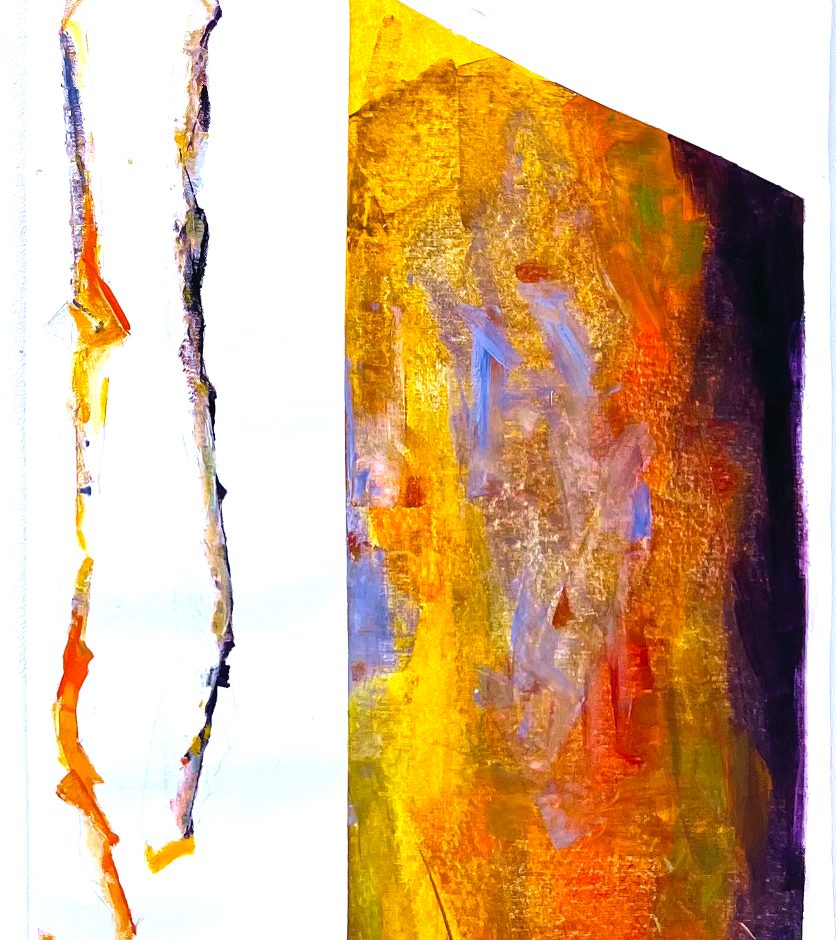
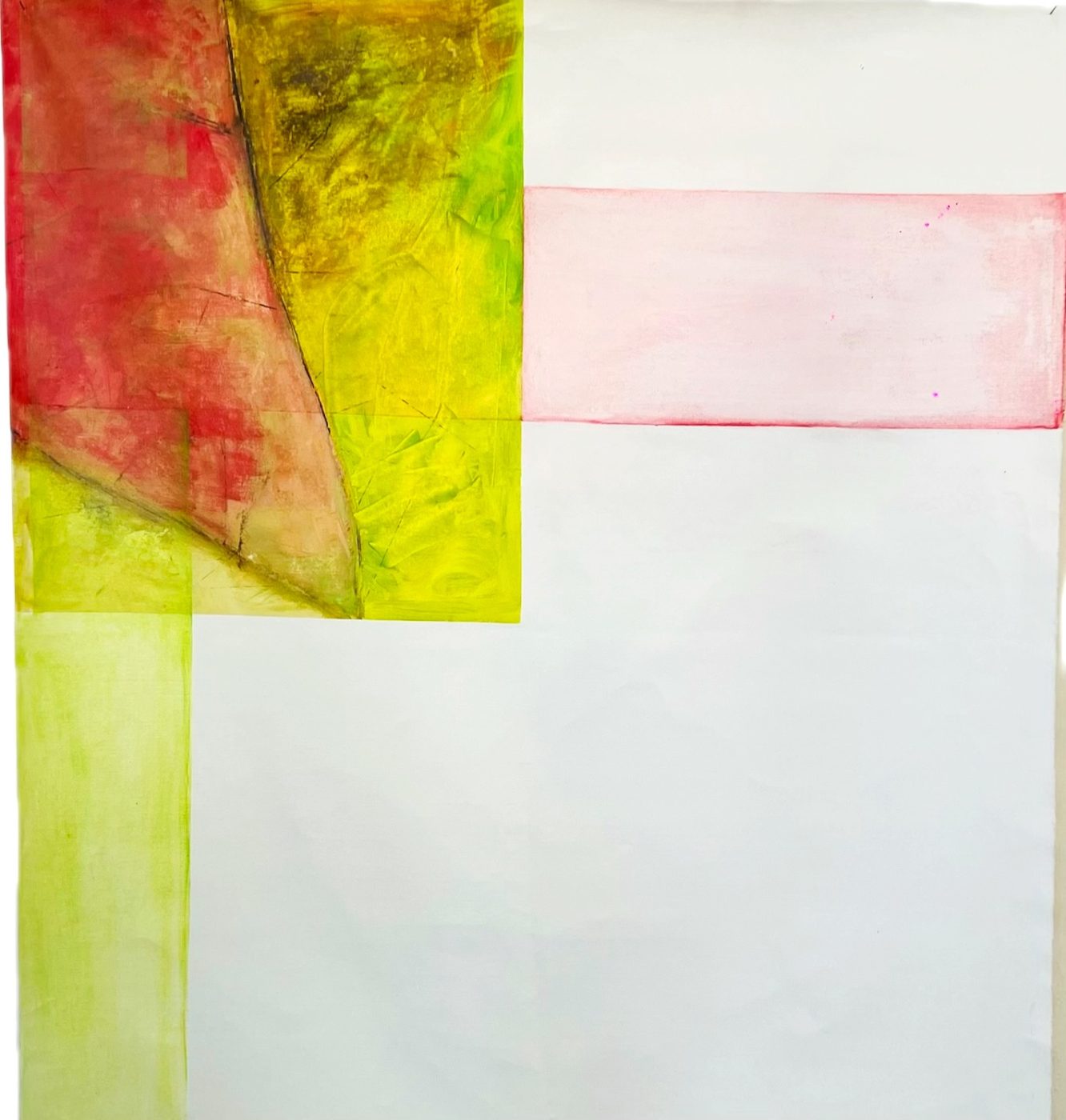
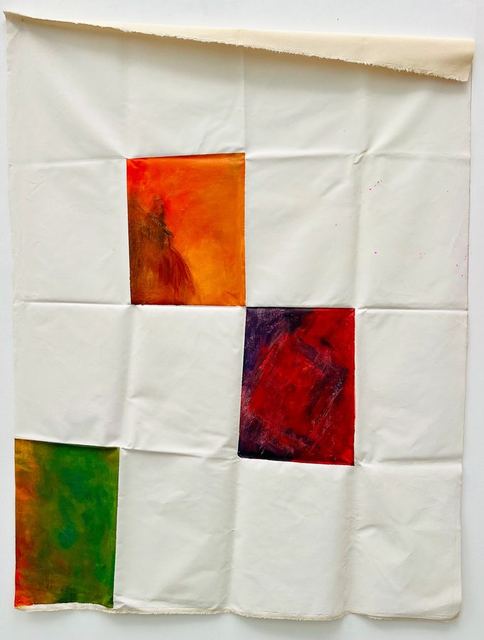
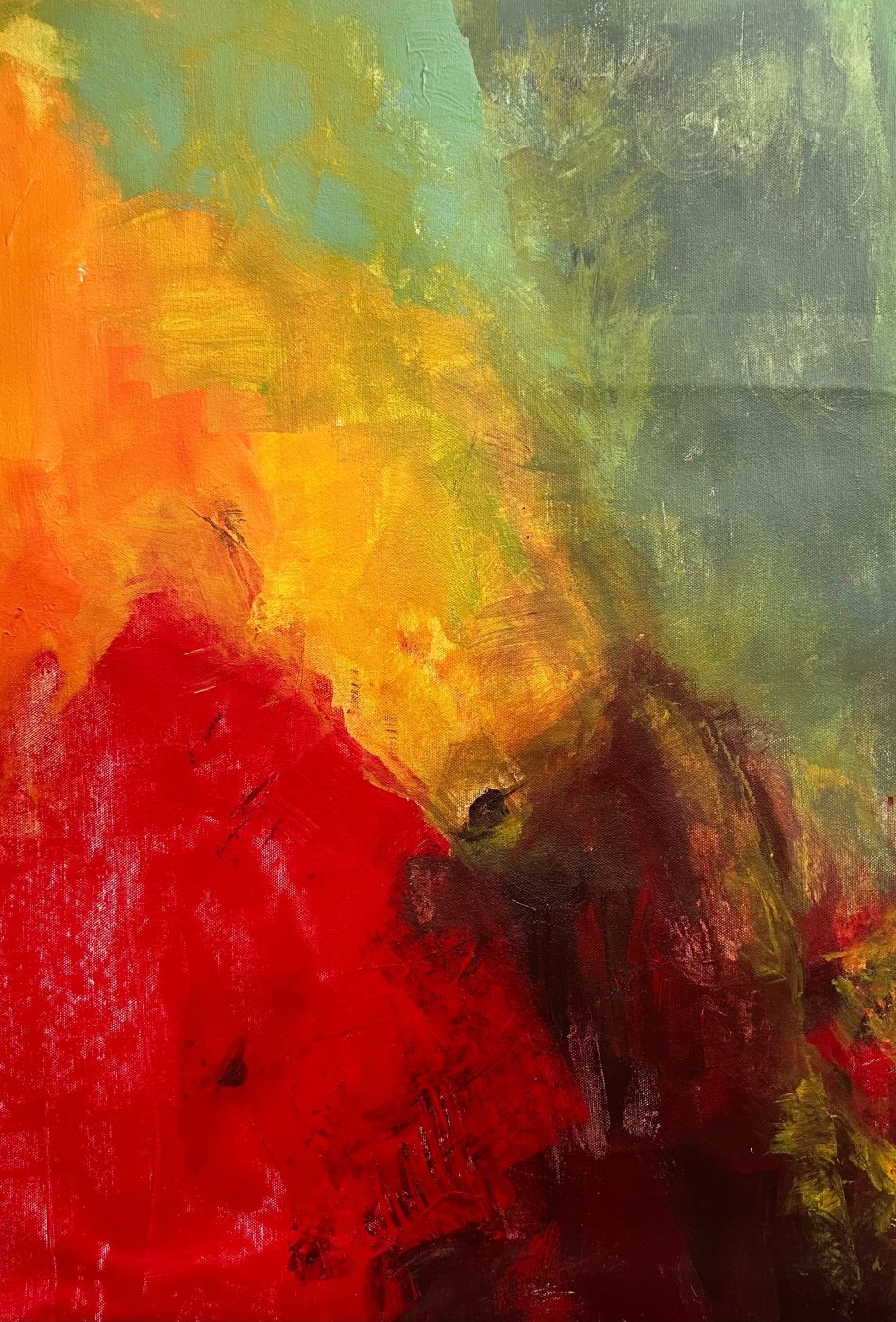
Peinture aux rouges, oranges et verts, L'automne
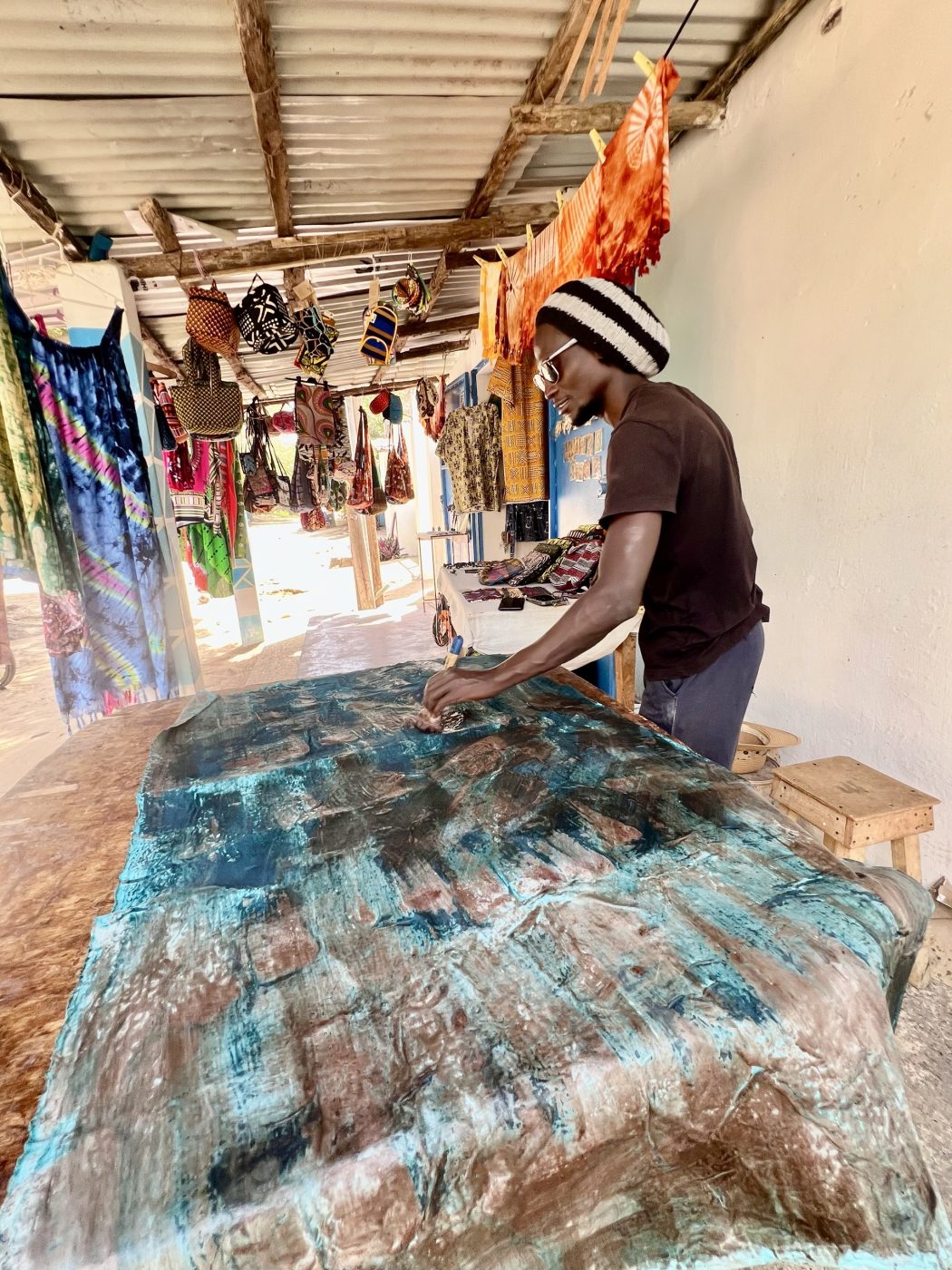
Atelier de batik au Sénégal
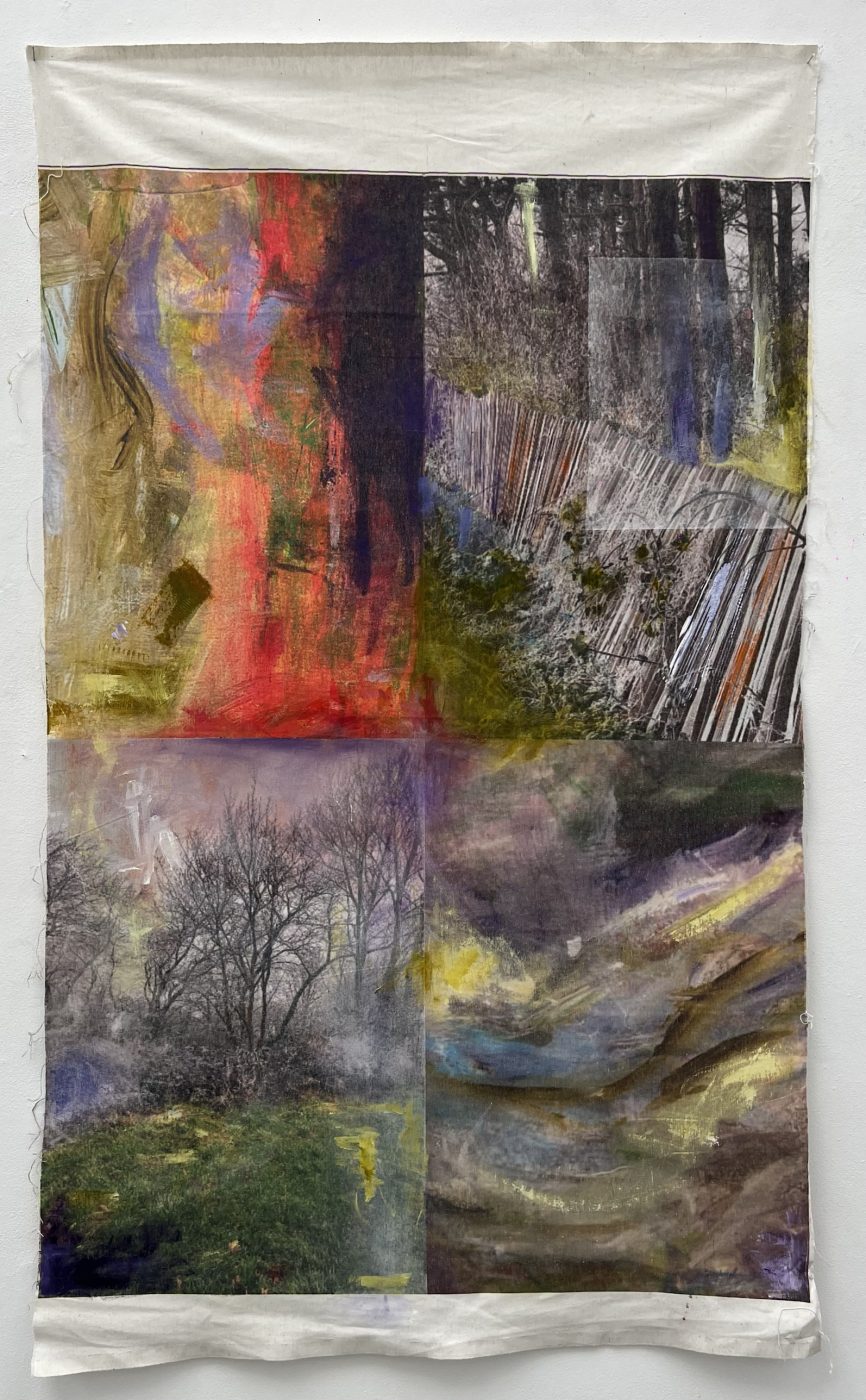
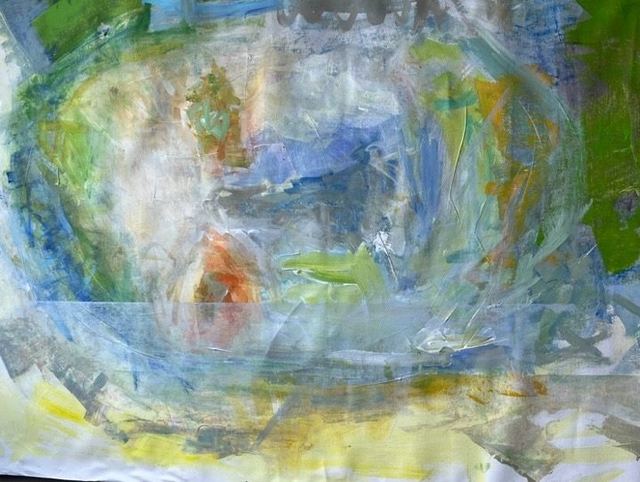
Toile imprimée de l'hiver
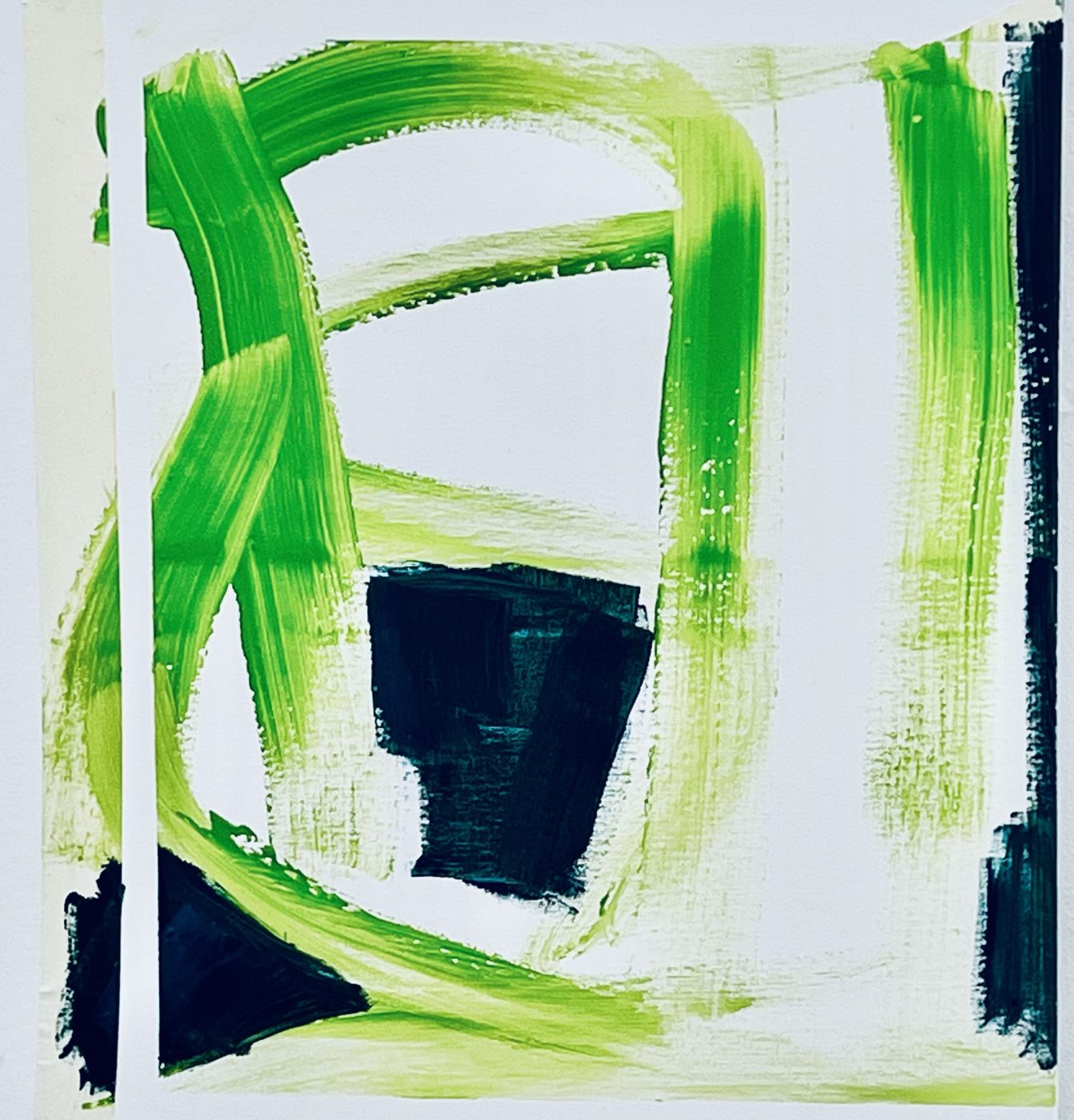
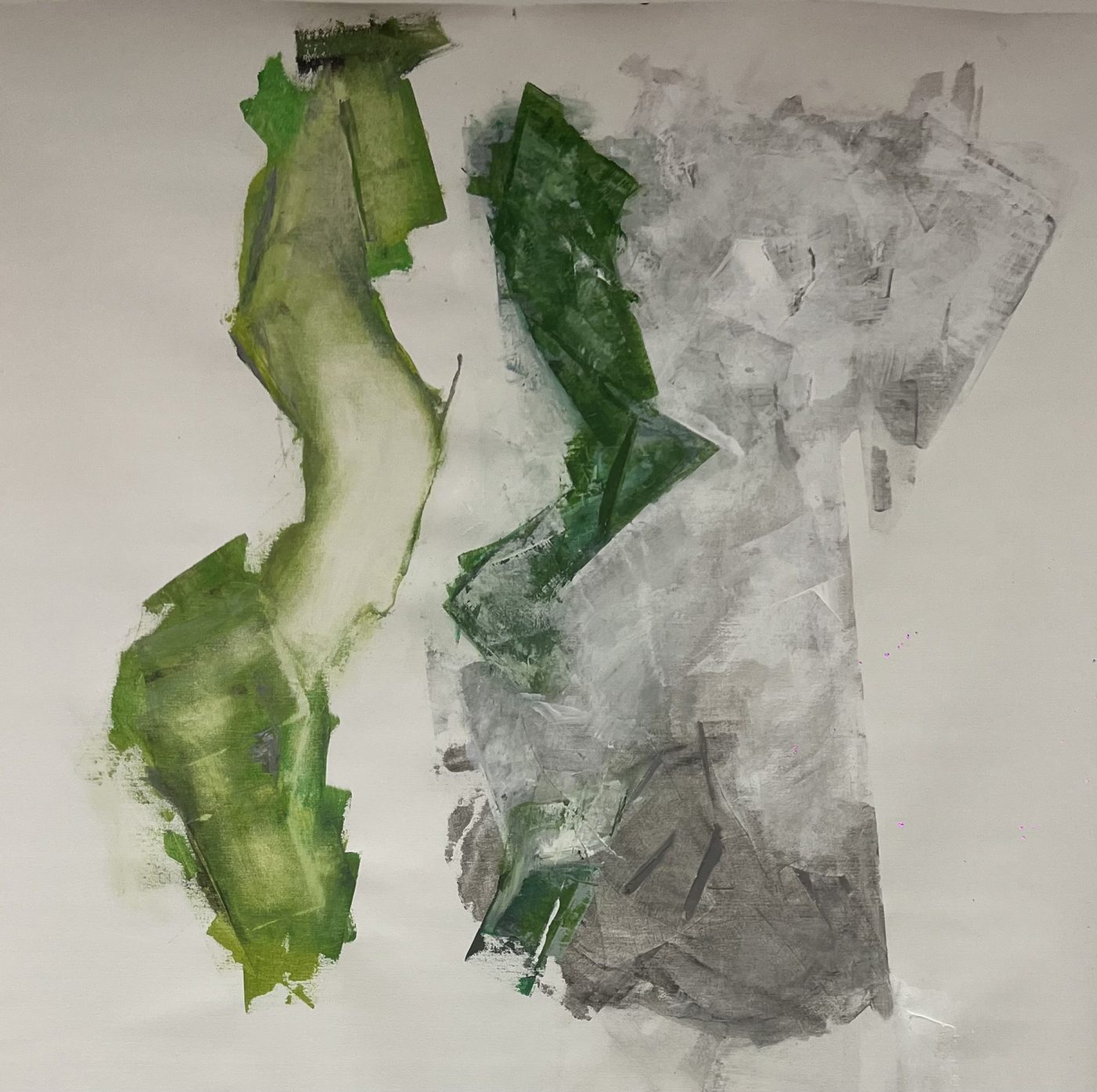
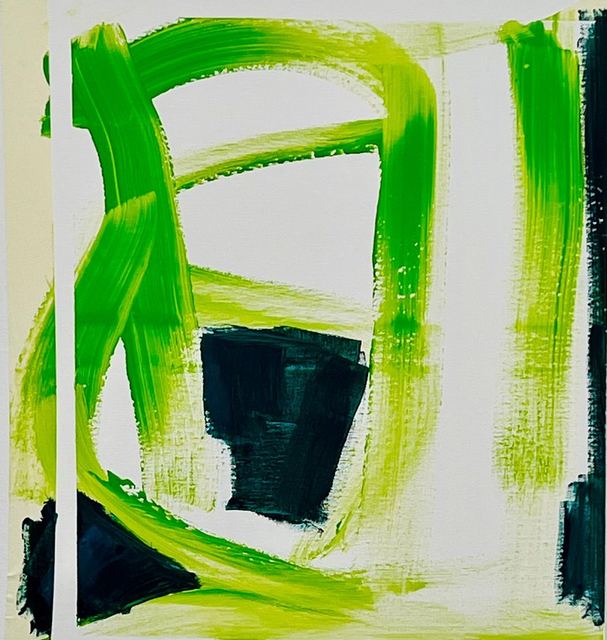
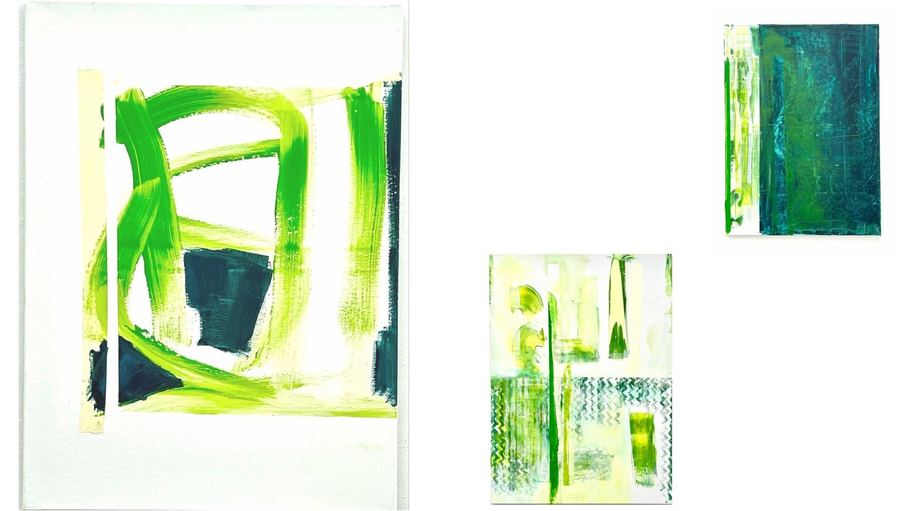
Peinture verte du printemps
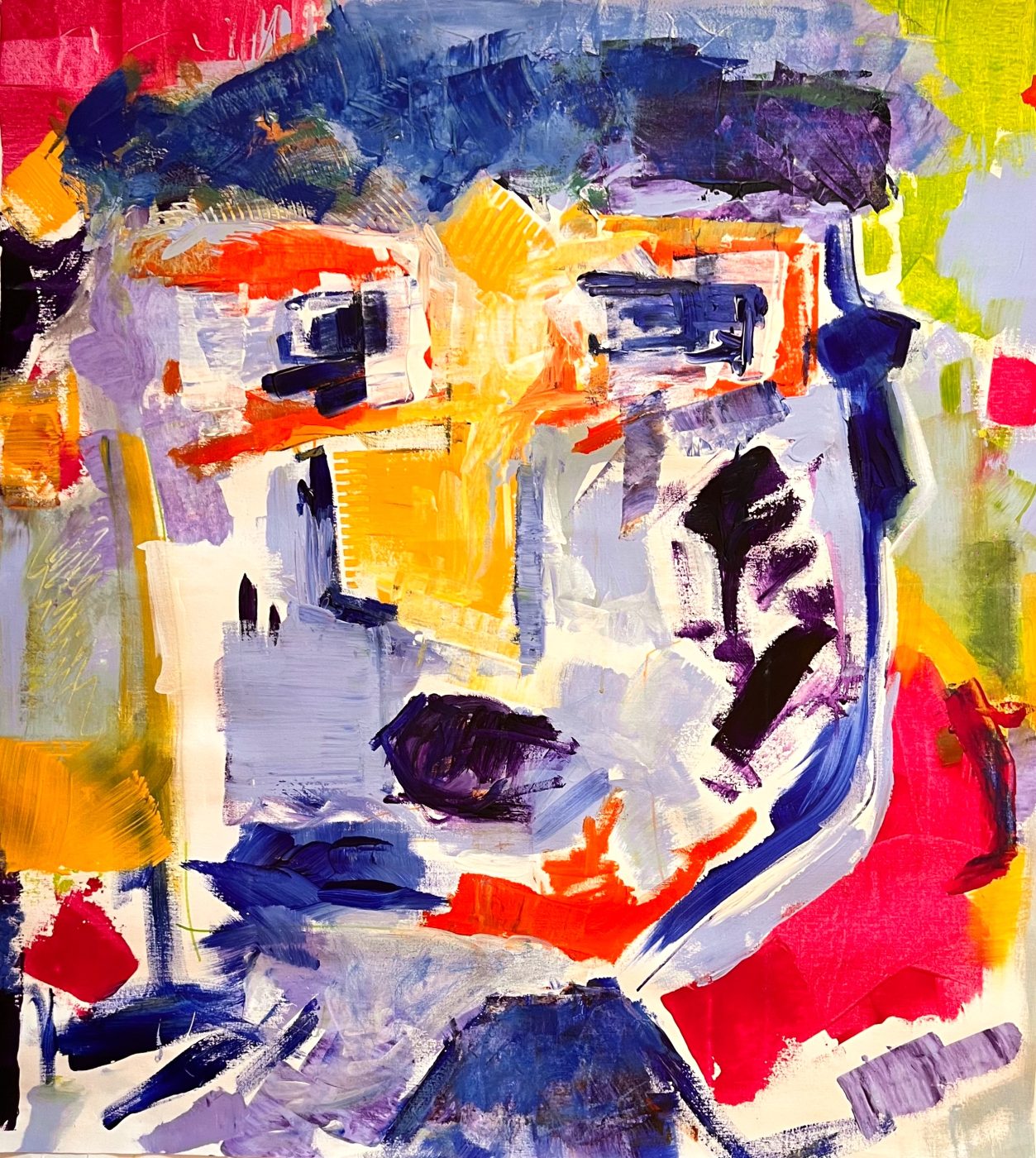
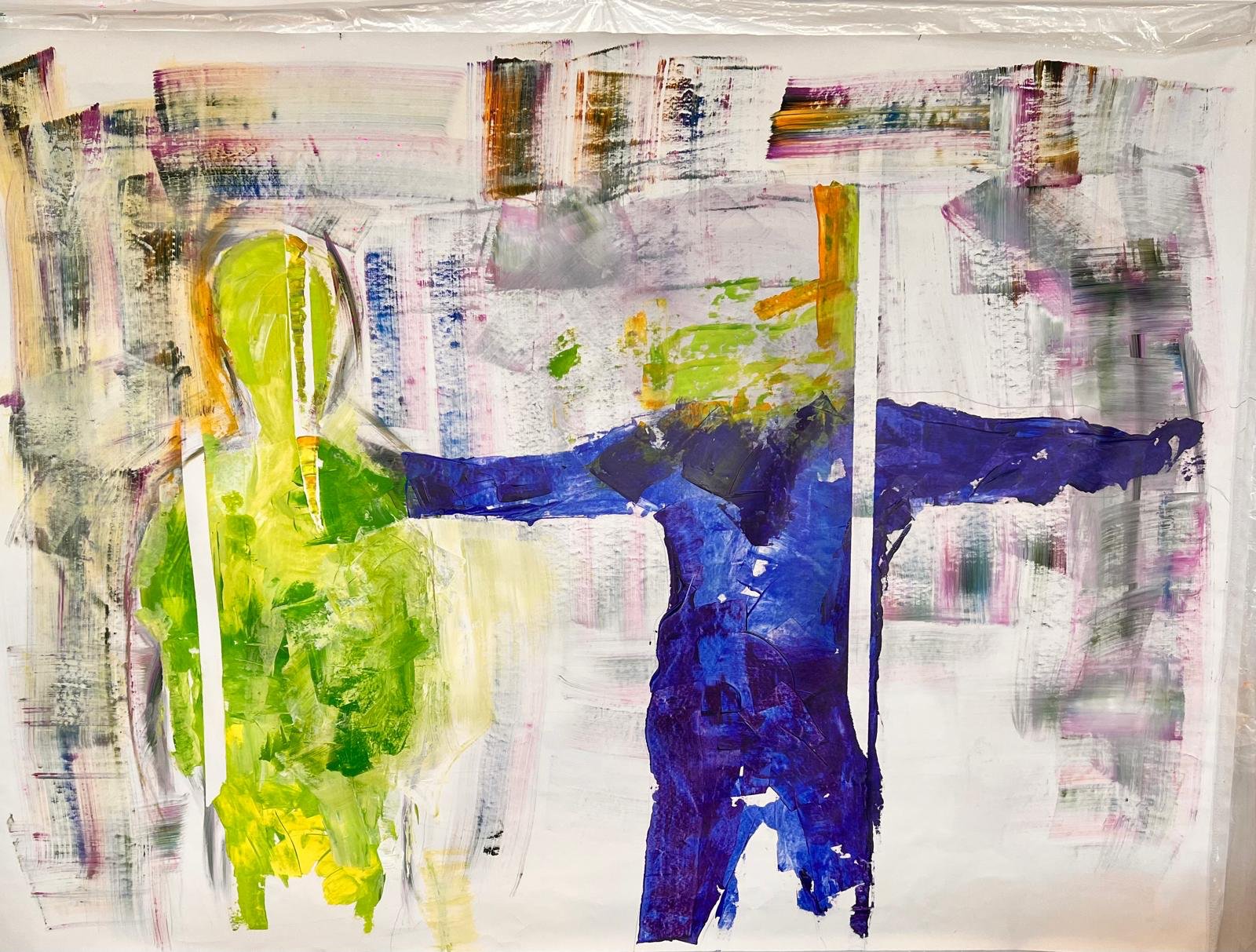
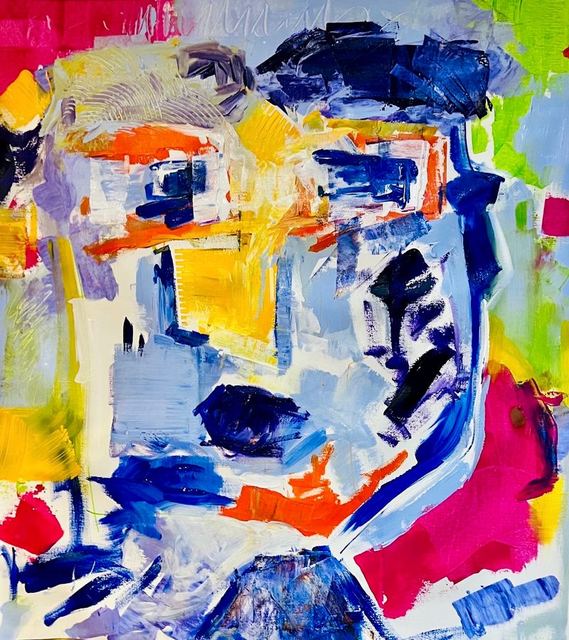
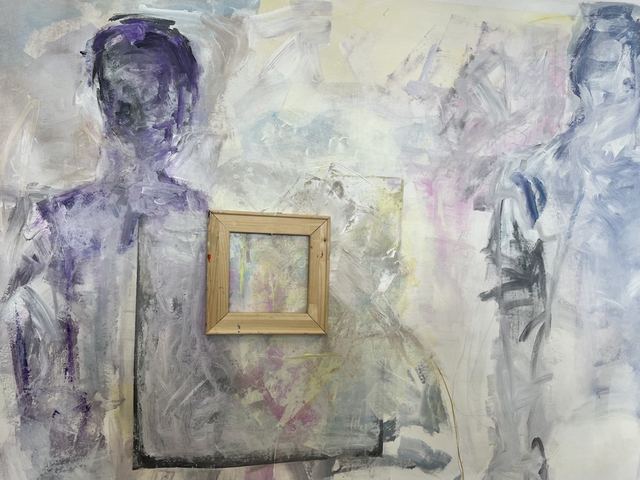
Portrait peint, point de départ du Domino
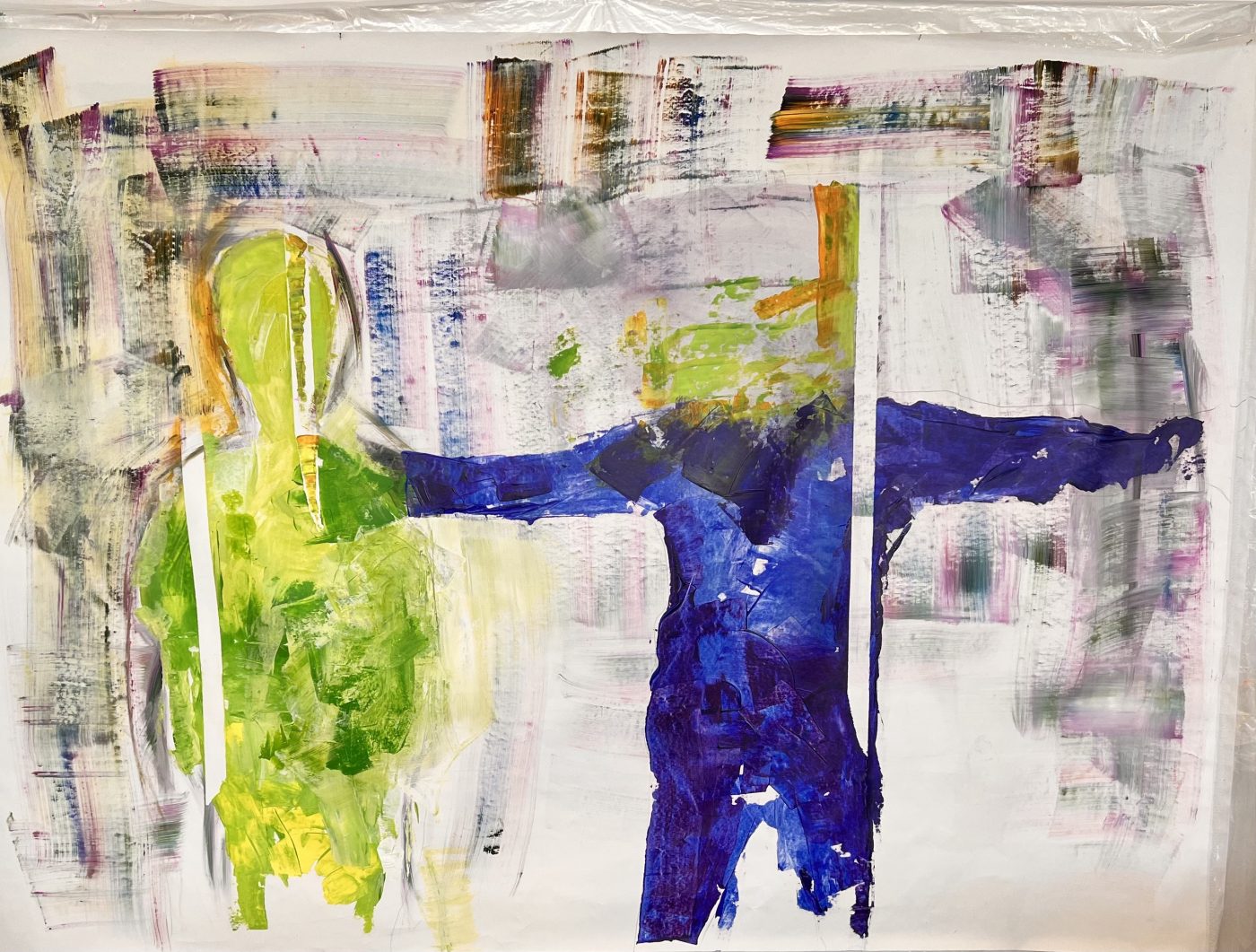
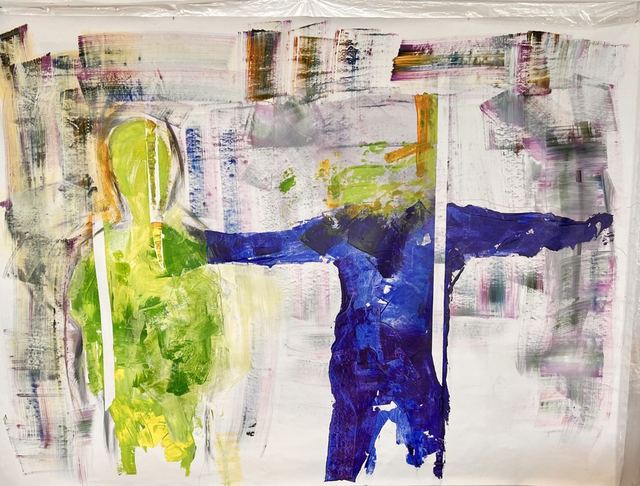
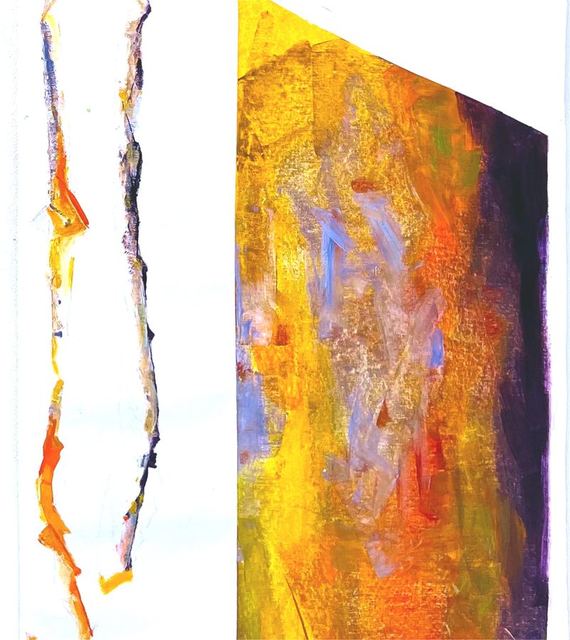
Silhouettes peintes sur toile, l'été
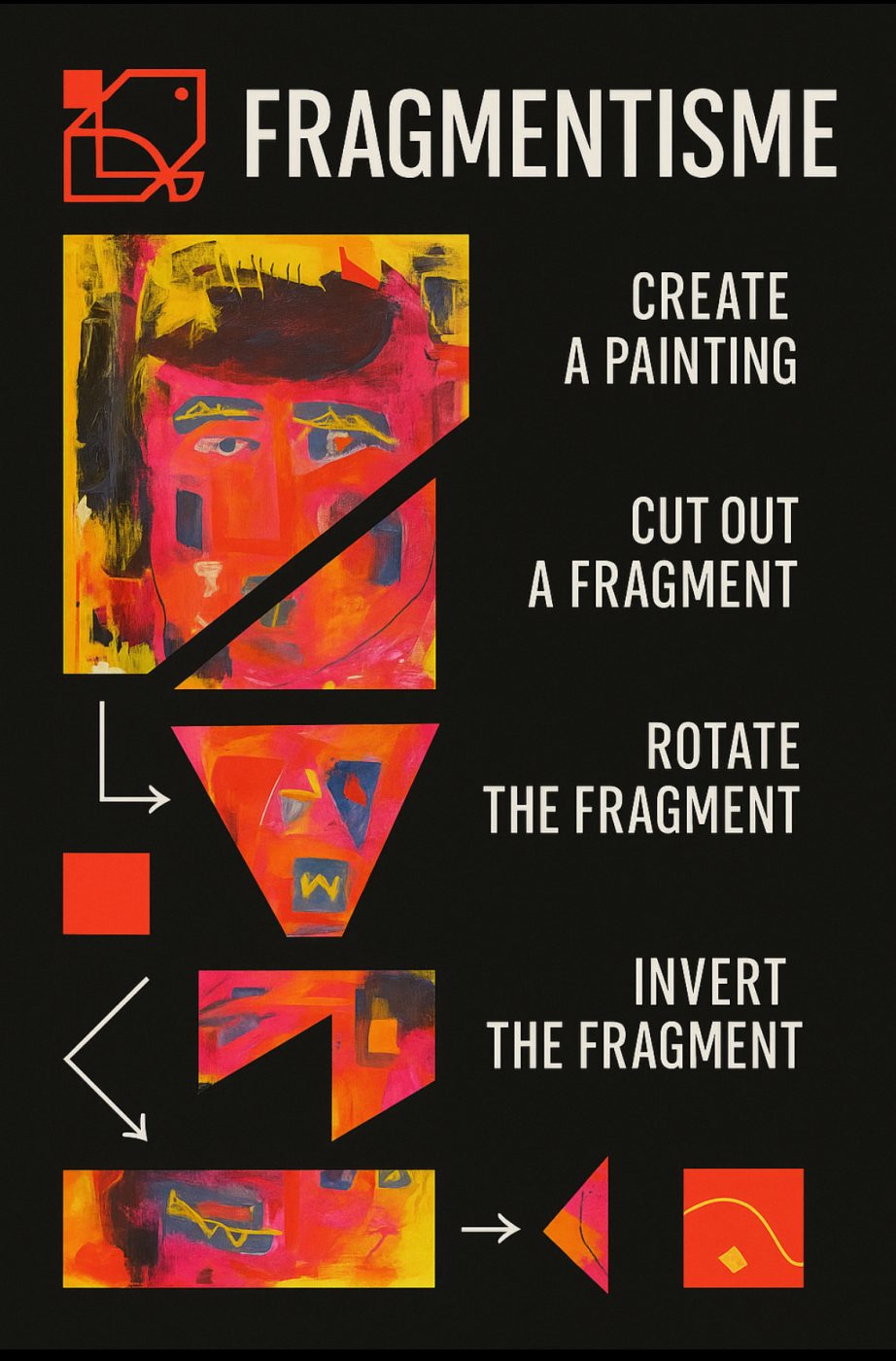
Affiche Fragmentisme
Evolving fragmentism

Fabienne Penninck

Each work becomes the source of a new work: painting, photography and digital recomposition.

Artistic approach

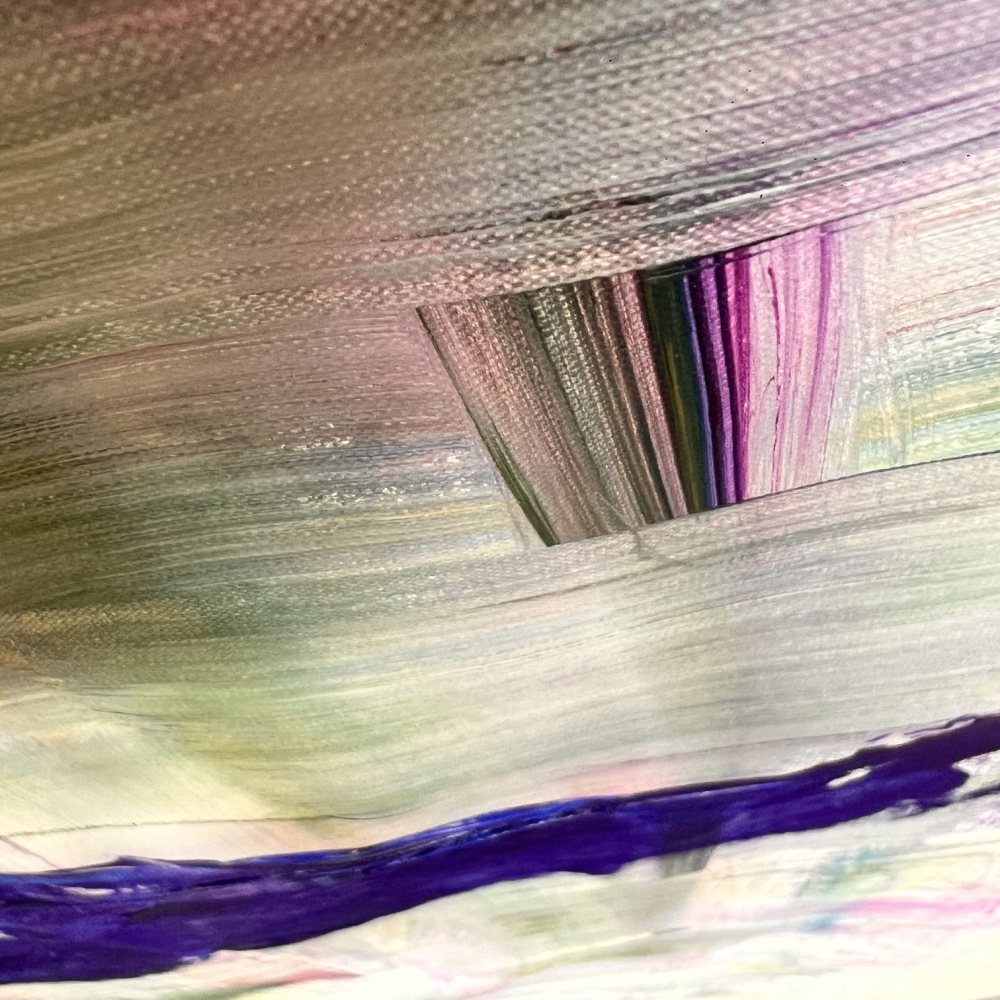
Painting as living matter

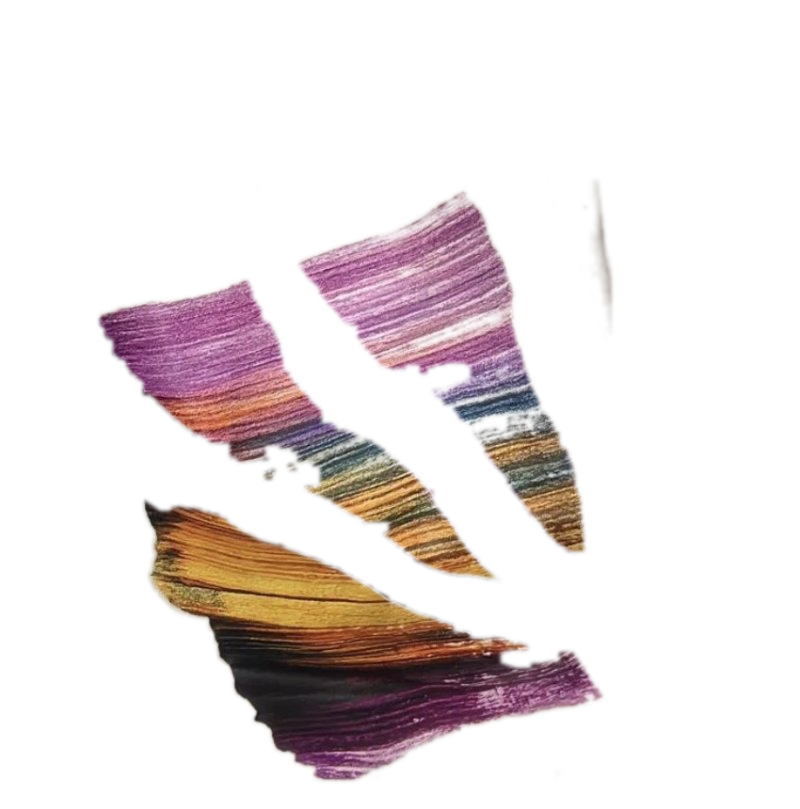
A fragment is not an incomplete part of the work, but a potential work in itself.

My work grows out of a process of continuous transformation. Each work becomes the source of a new one, in a cycle where painting, photography and digital recomposition are in constant dialogue.

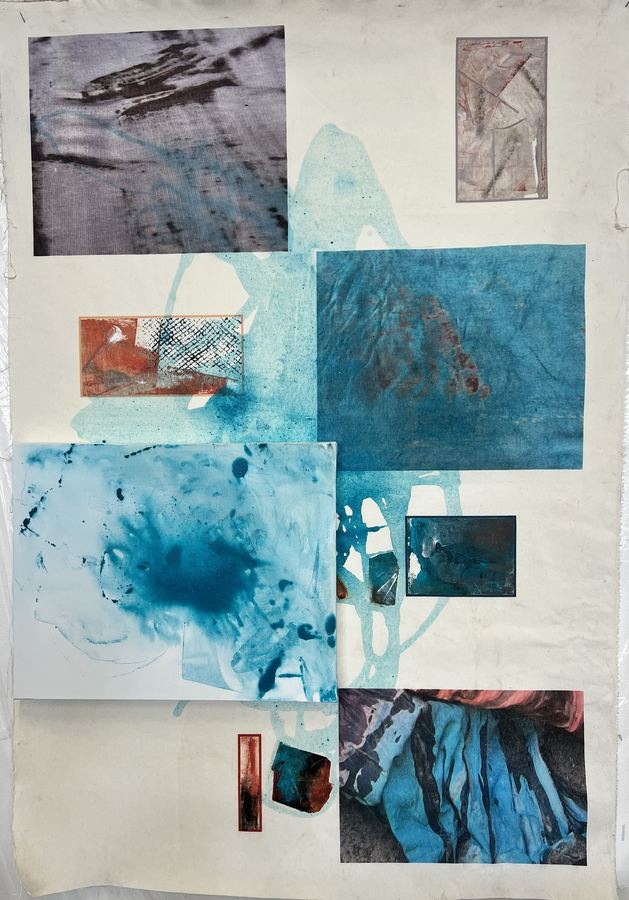
The starting point is a large original painting. I then photograph details of it: fragments chosen for their visual and emotional potential. These fragments are enlarged, rearranged, combined with other images or natural elements, then transformed digitally. Some of these details in turn become the subject of a new painting.

This process can repeat endlessly. Every fragment holds the possibility of a work of its own, and every work carries the seeds of a future transformation.

The domino metaphor makes this chain of images easy to follow, but my approach goes further, exploring visual memory, metamorphosis, fragmentation and rebirth. The work is no longer a fixed object but an organism in constant evolution.

I see painting as a living matter able to regenerate itself. By isolating, enlarging, recomposing and repainting certain details, I reveal worlds that remained hidden in the original image. Each series is a visual map of an evolving process, where the origin stays present while constantly changing.

Evolving fragmentism

A work in constant evolution

A painting, its fragments, and the works born from them. Each image carries the next one within it.

Domino Process – Evolving fragments

The series

Fragmentism

Create a painting, cut out a fragment, rotate it, invert it: the process in four gestures.

Affiche Fragmentisme : créer une peinture, découper un fragment, le faire pivoter, l'inverser

Autumn

The large portrait and its fragments: reds, yellows and blues travelling from one painting to the next.

Peinture L'automne, rouges et oranges
Grand portrait peint
Collage de fragments du portrait

Winter

Painted faces, fragments and printed fabrics, with a photograph of a forest and a fence.

Toile imprimée de l'hiver : forêt, clôture, arbres nus et peinture
Tissu imprimé de l'hiver

Spring

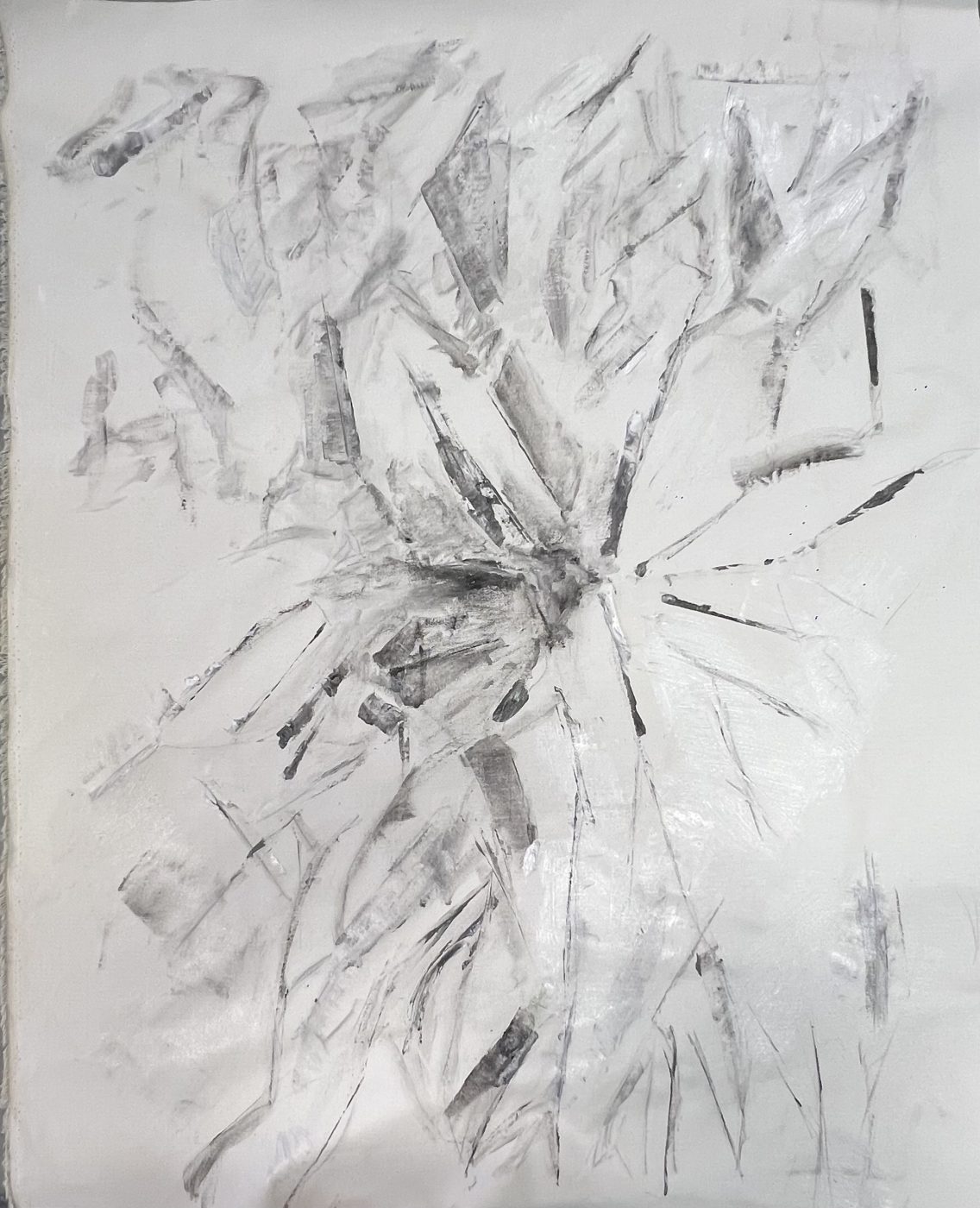
Crumpled plastic, a deeply folded canvas and green paint that becomes a flower.

Peinture verte du printemps
Toile verte et grise aux plis marqués
Toile grise froissée

Summer

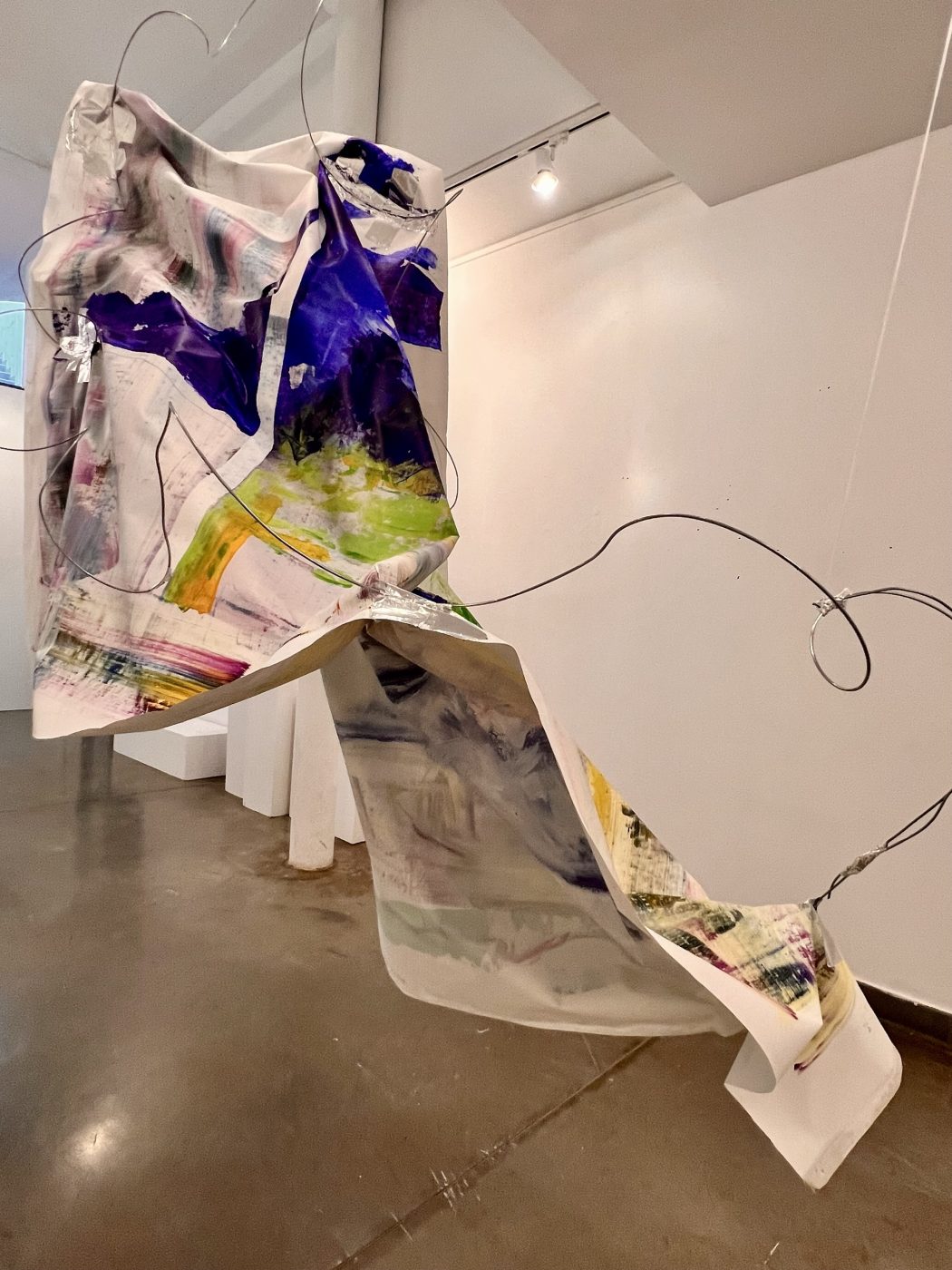
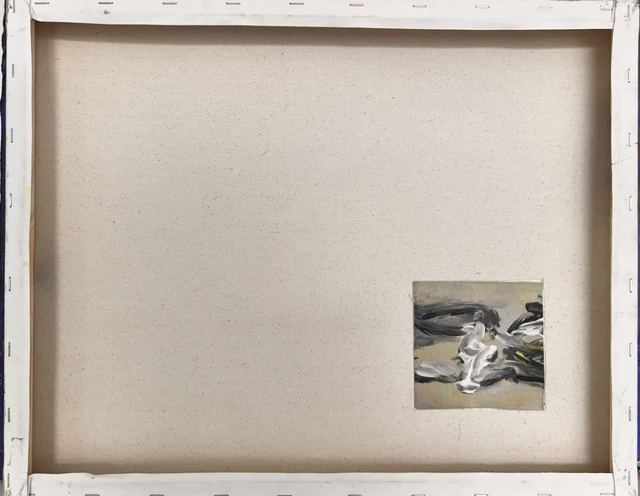
Drawn silhouettes, a canvas turned over: the back becomes the front, all the way to the installation.

Silhouettes peintes sur toile
Toile de l'été

Play with the dominoes

Travel notebooks

Travels

Each journey becomes a domino: techniques learned elsewhere, photographs taken on site, then fragments that come back to the studio in Belgium.

Senegal → Morocco → Belgium

Batik

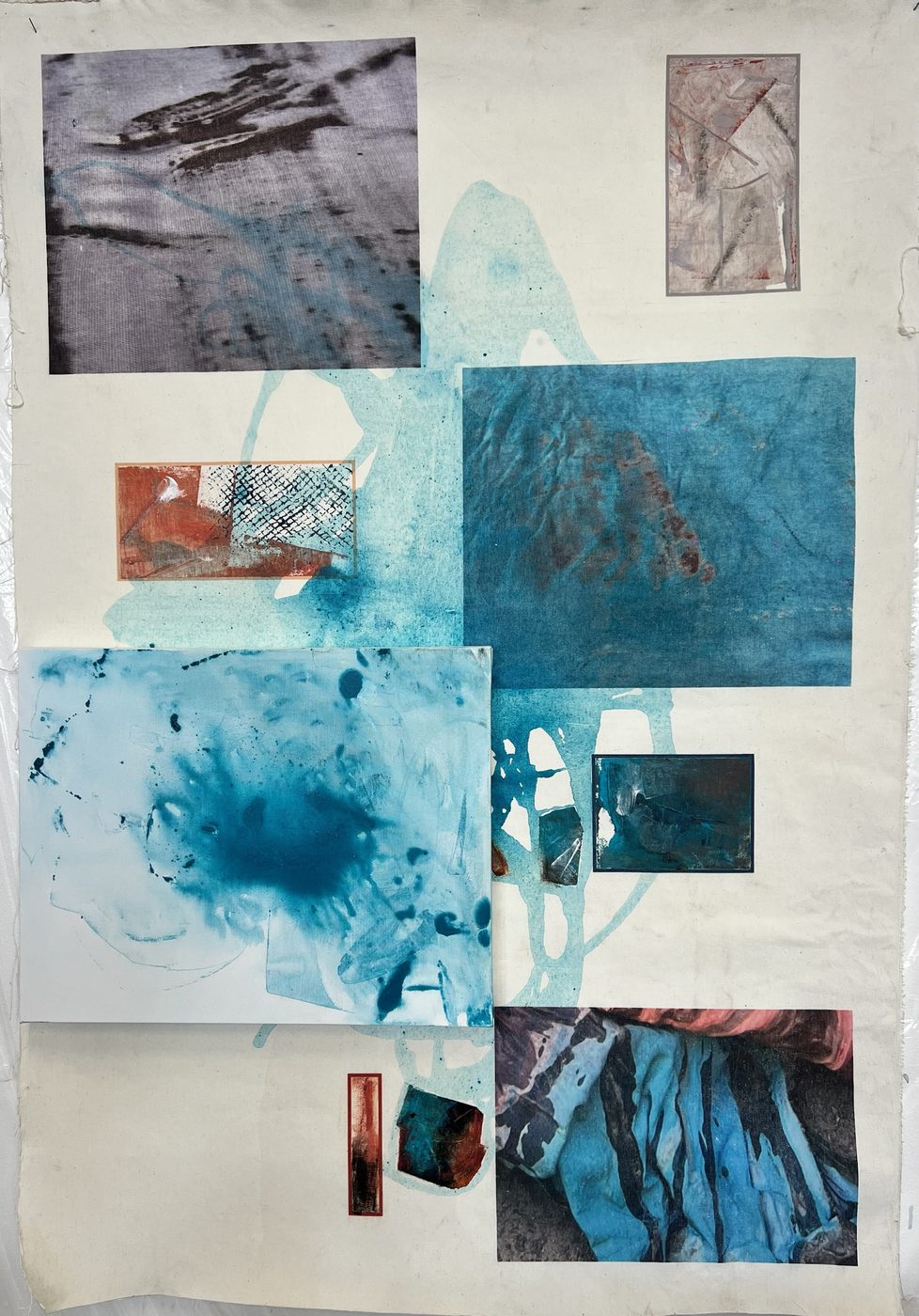
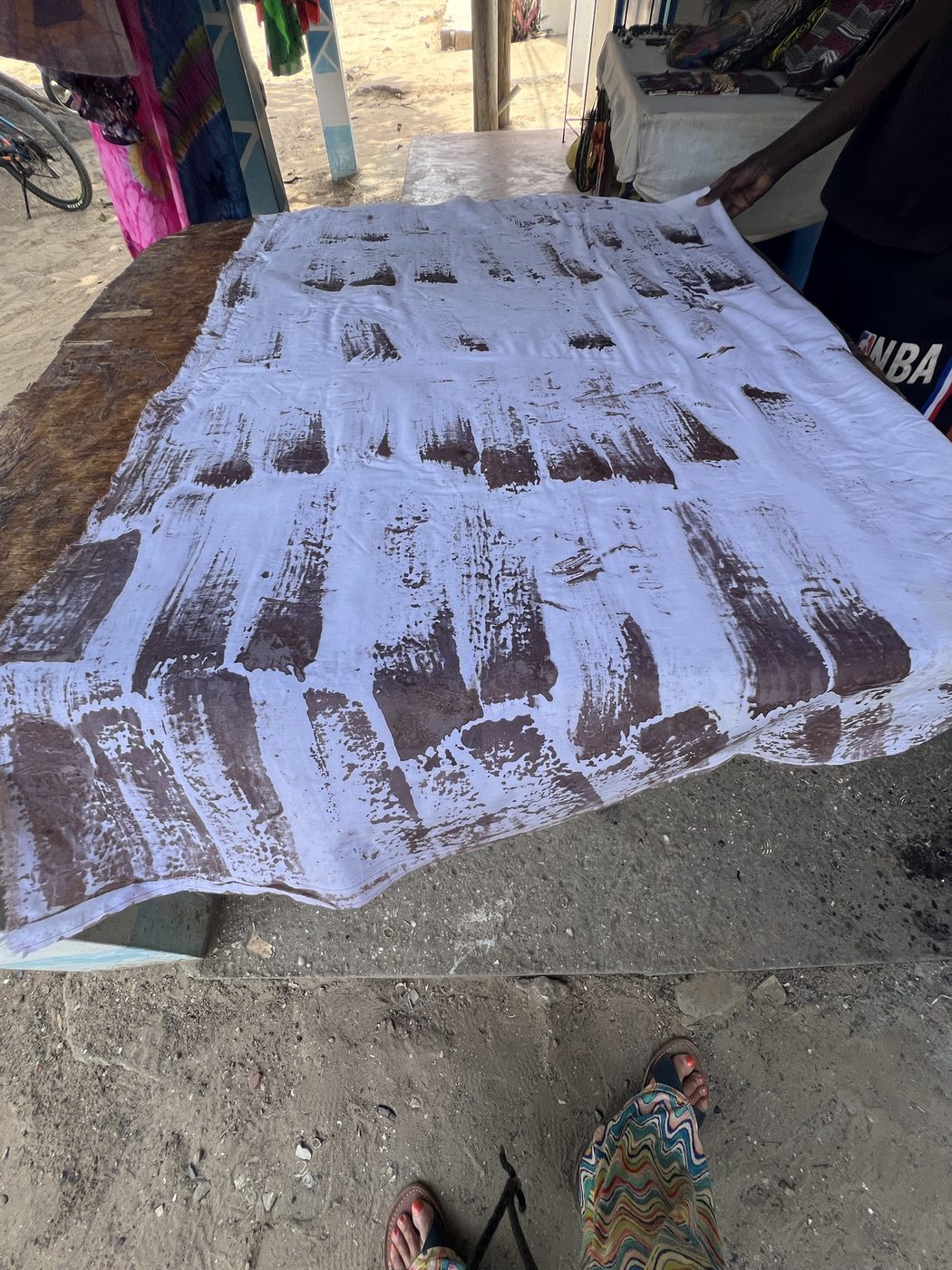
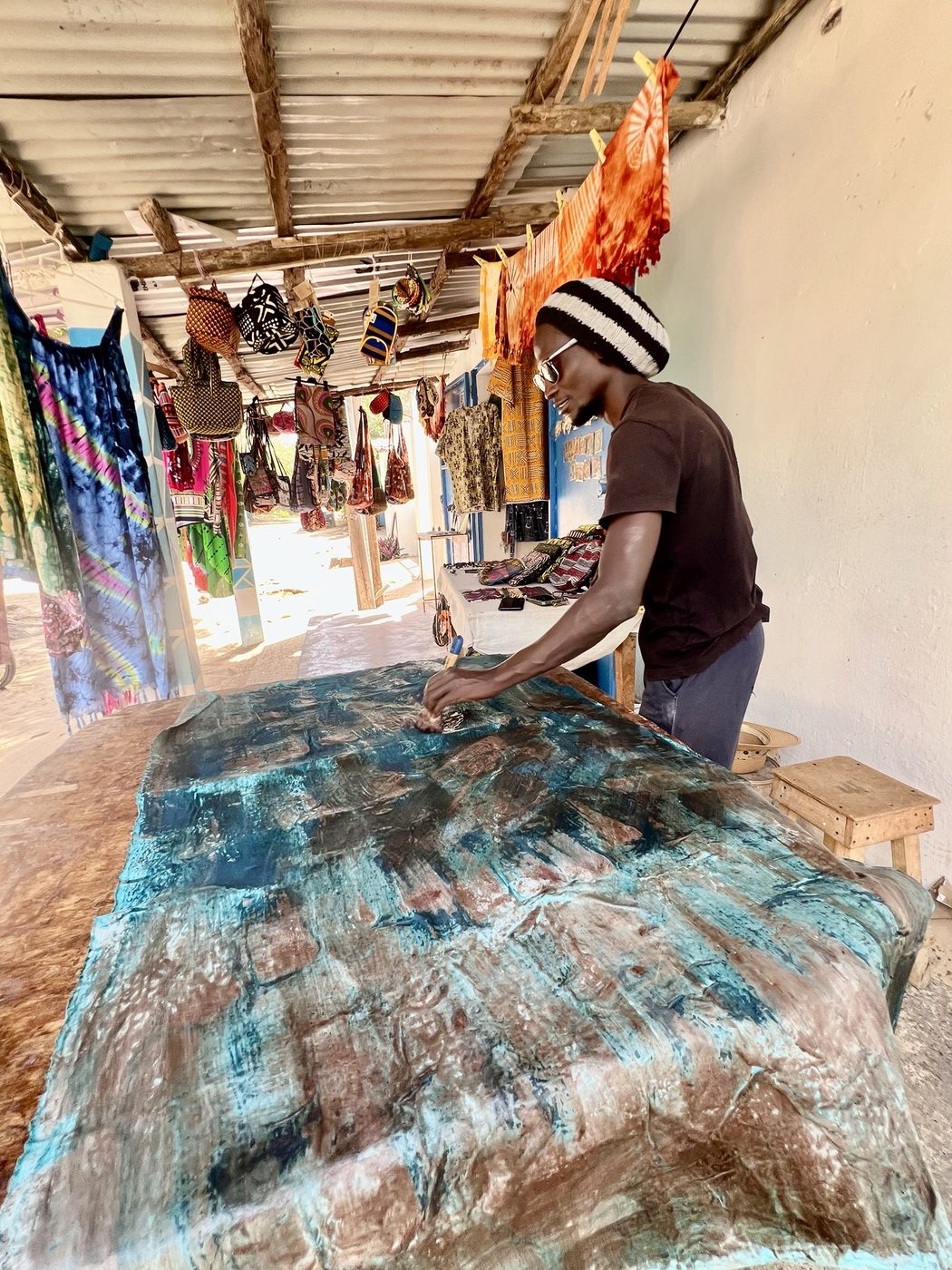
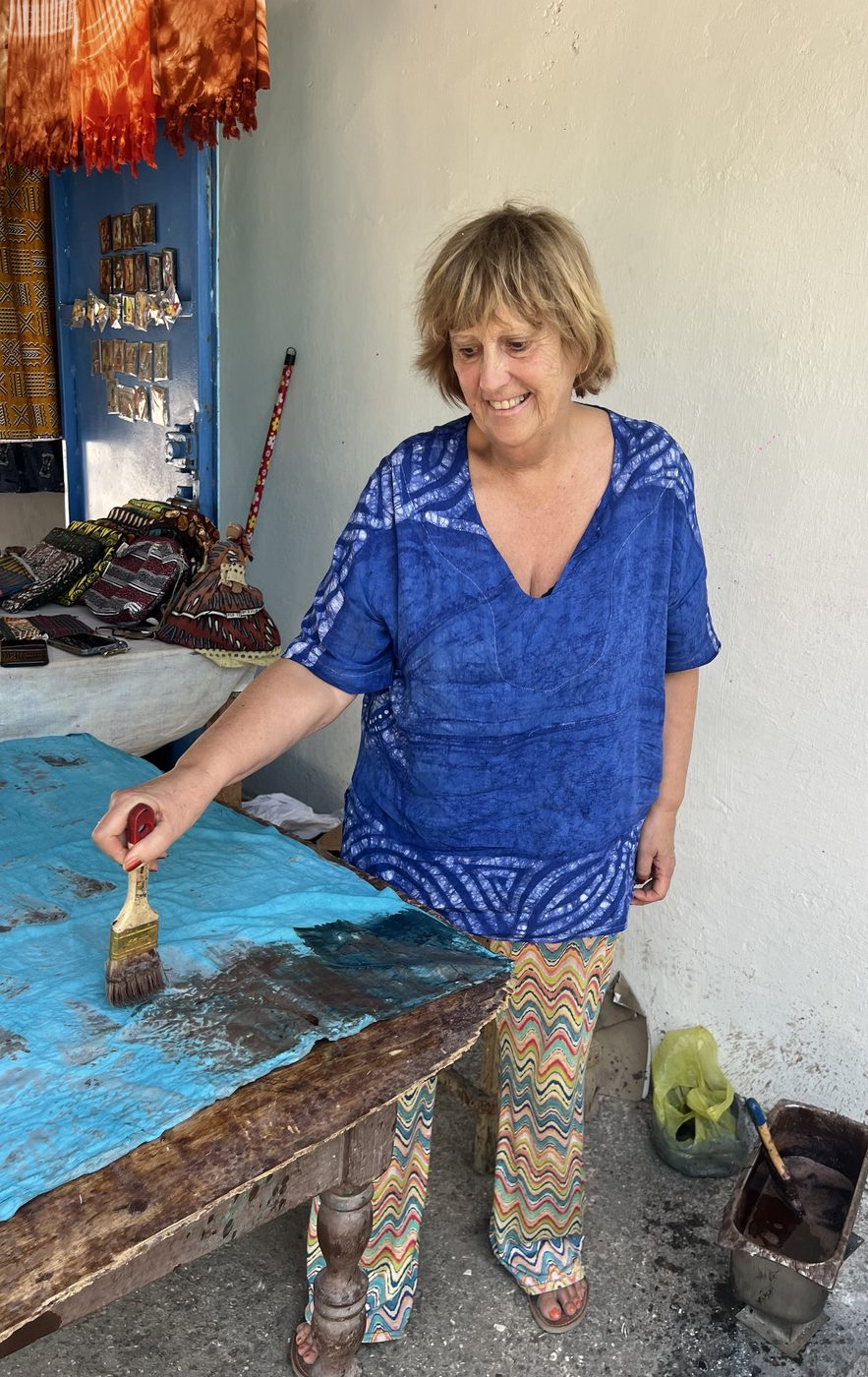
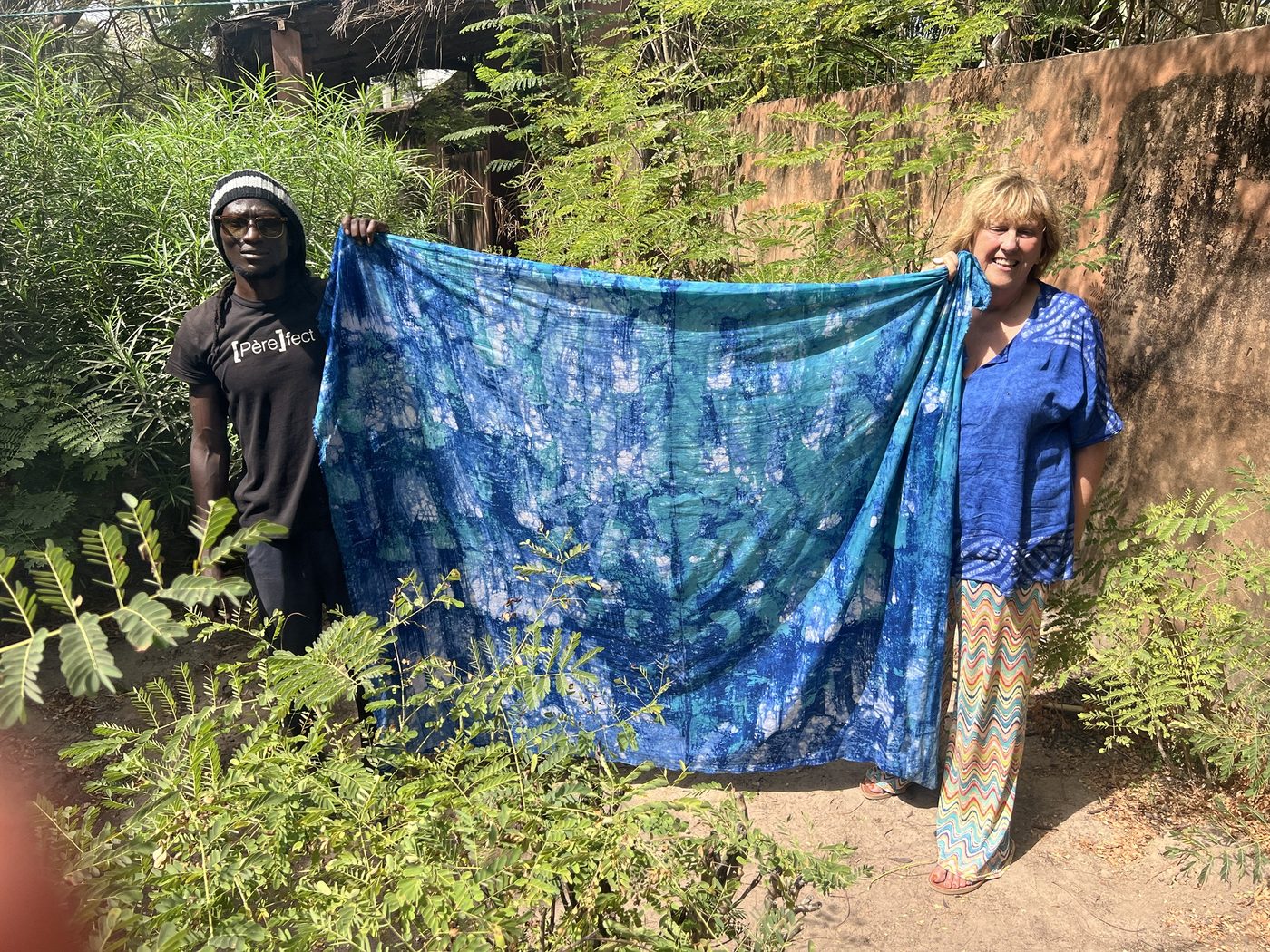
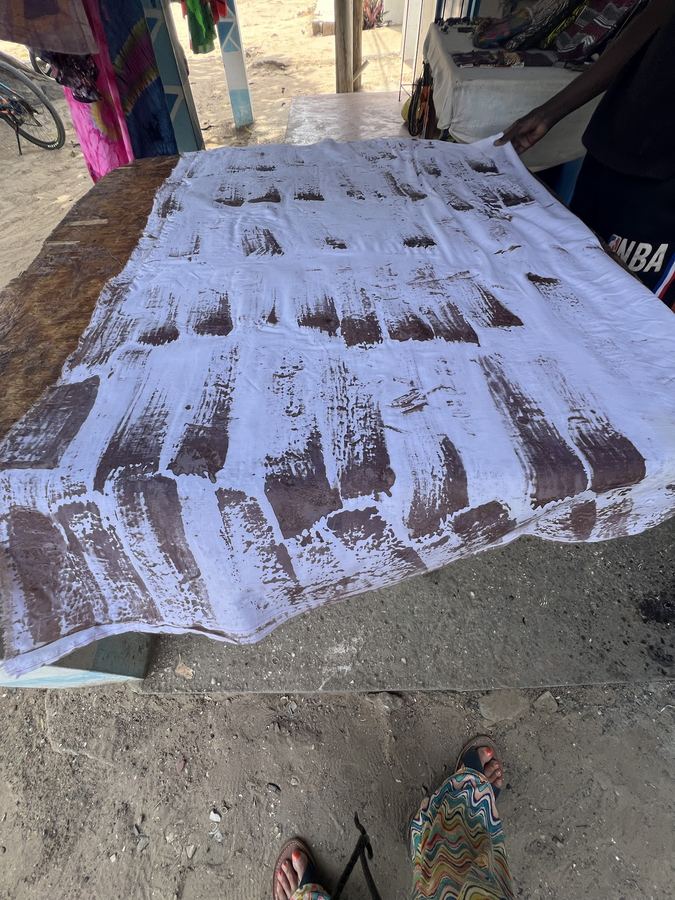
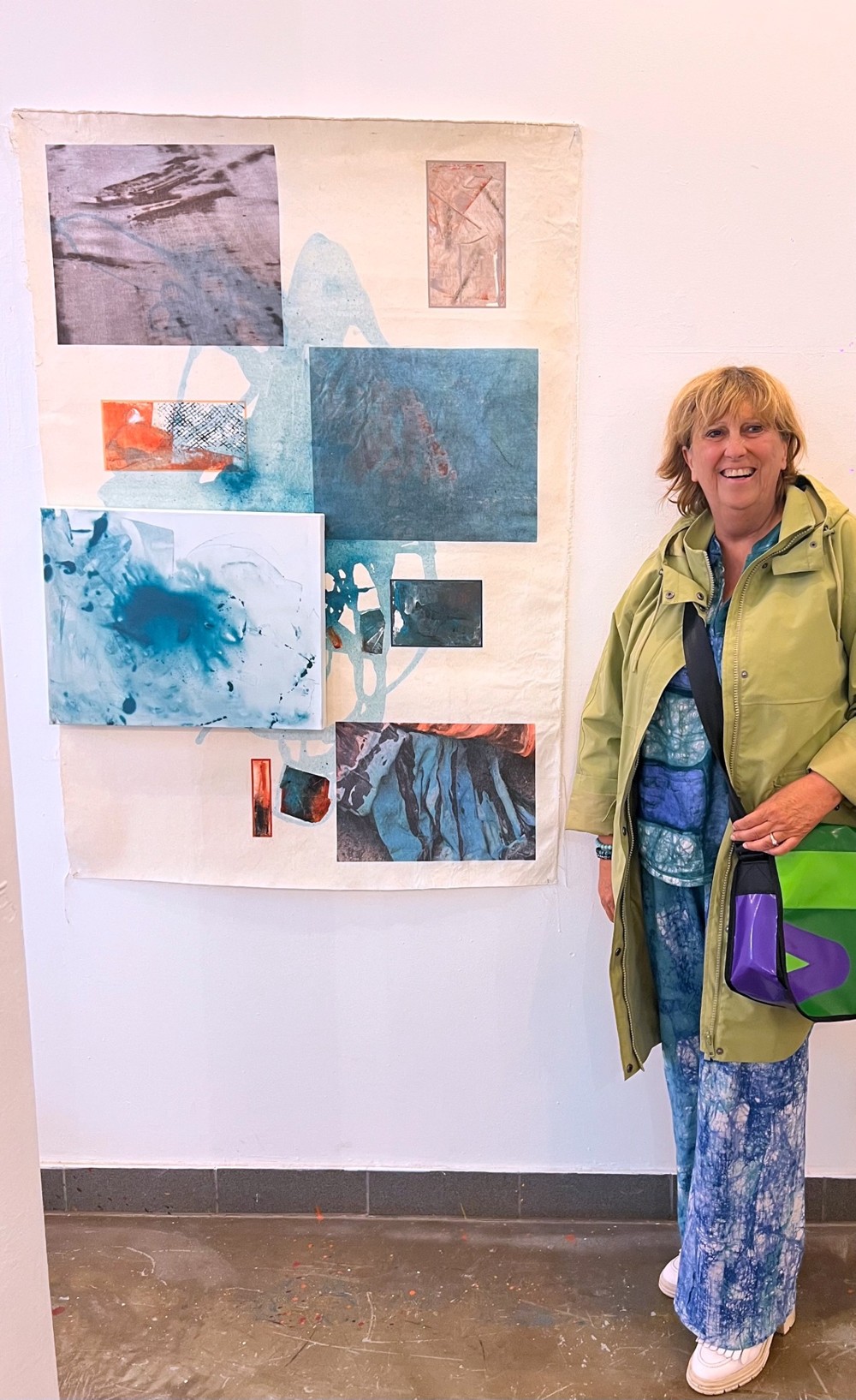
In Senegal, batik: wax, brush and indigo bath, alongside a local craftsman. Details photographed there are printed on fabric, then repainted in the studio. On one side the canvas, on the other the fabric and the outfit.

Play the travel domino

Tissu imprimé de fragments de batik, repeint en bleu, avec une toile posée dessus
Batik brun sur tissu blanc
The first batik
Un artisan travaille la cire sur un batik
The workshop
Fabienne passe la cire au pinceau sur un tissu bleu
Brushing on the wax
Le grand batik bleu tenu à deux
The finished batik

From painting to garment

Textile

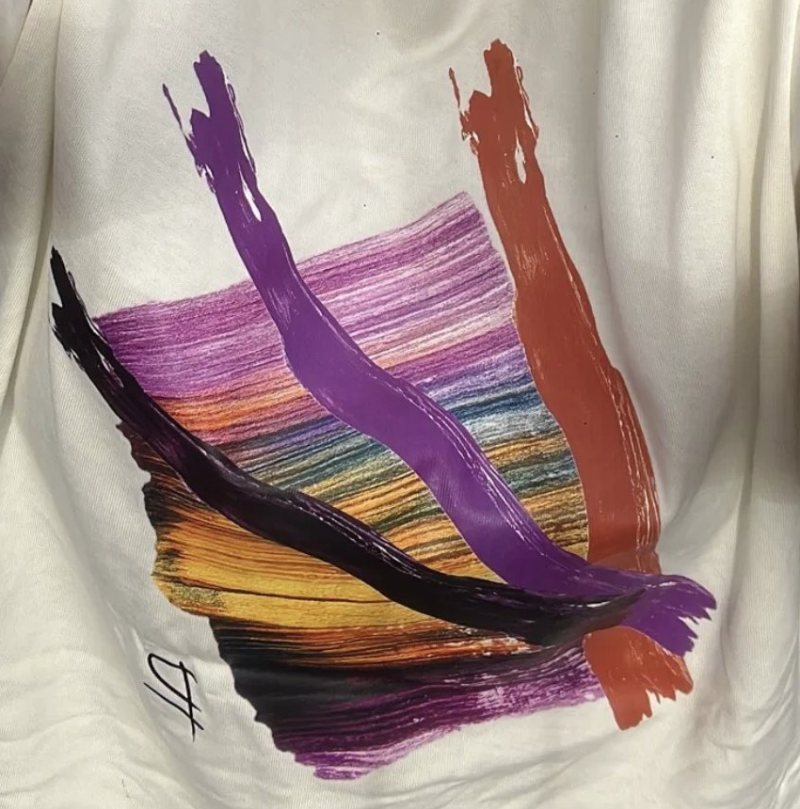
The large canvas leaves the wall and becomes something to wear.

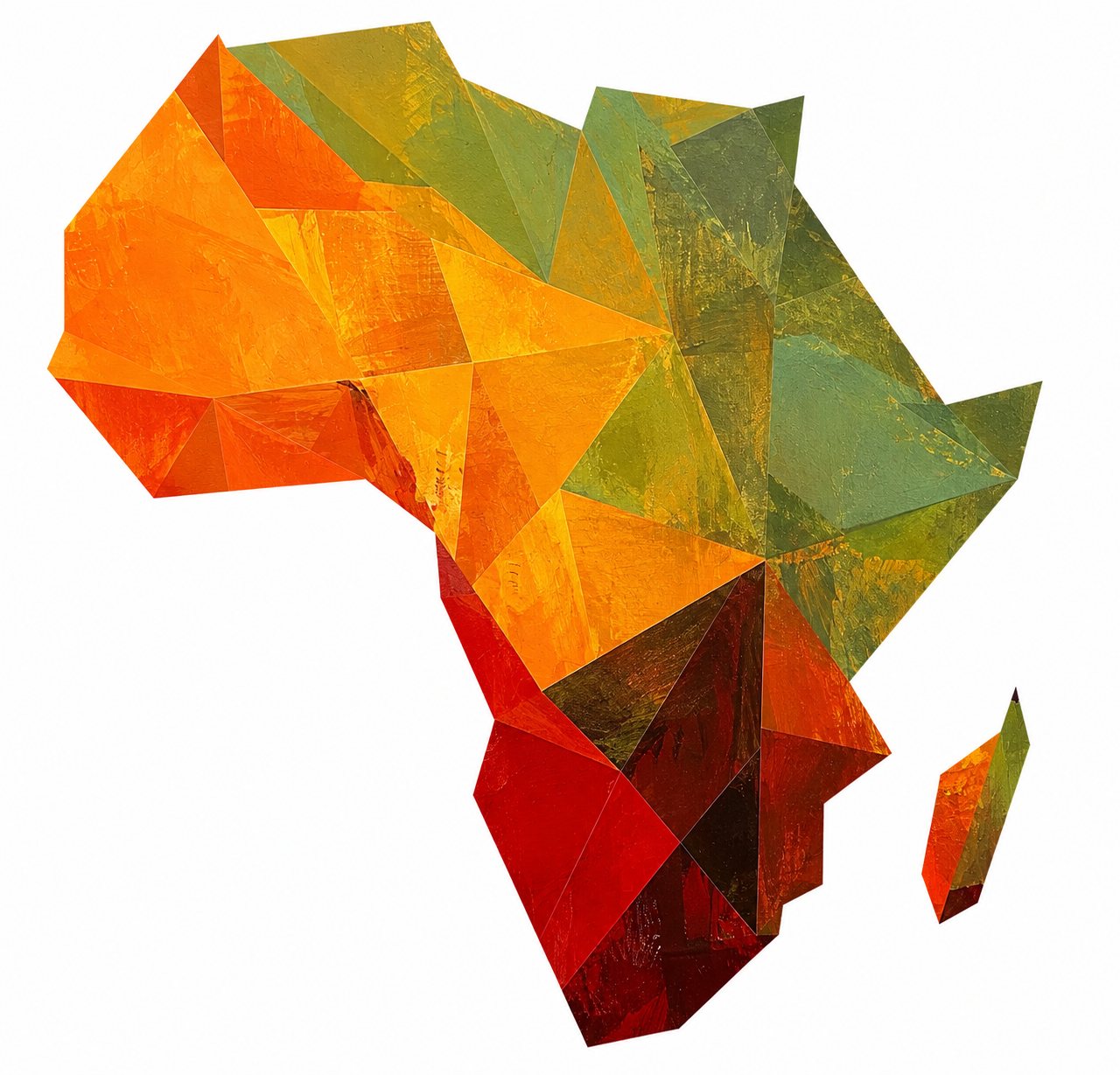
Africa, gliding

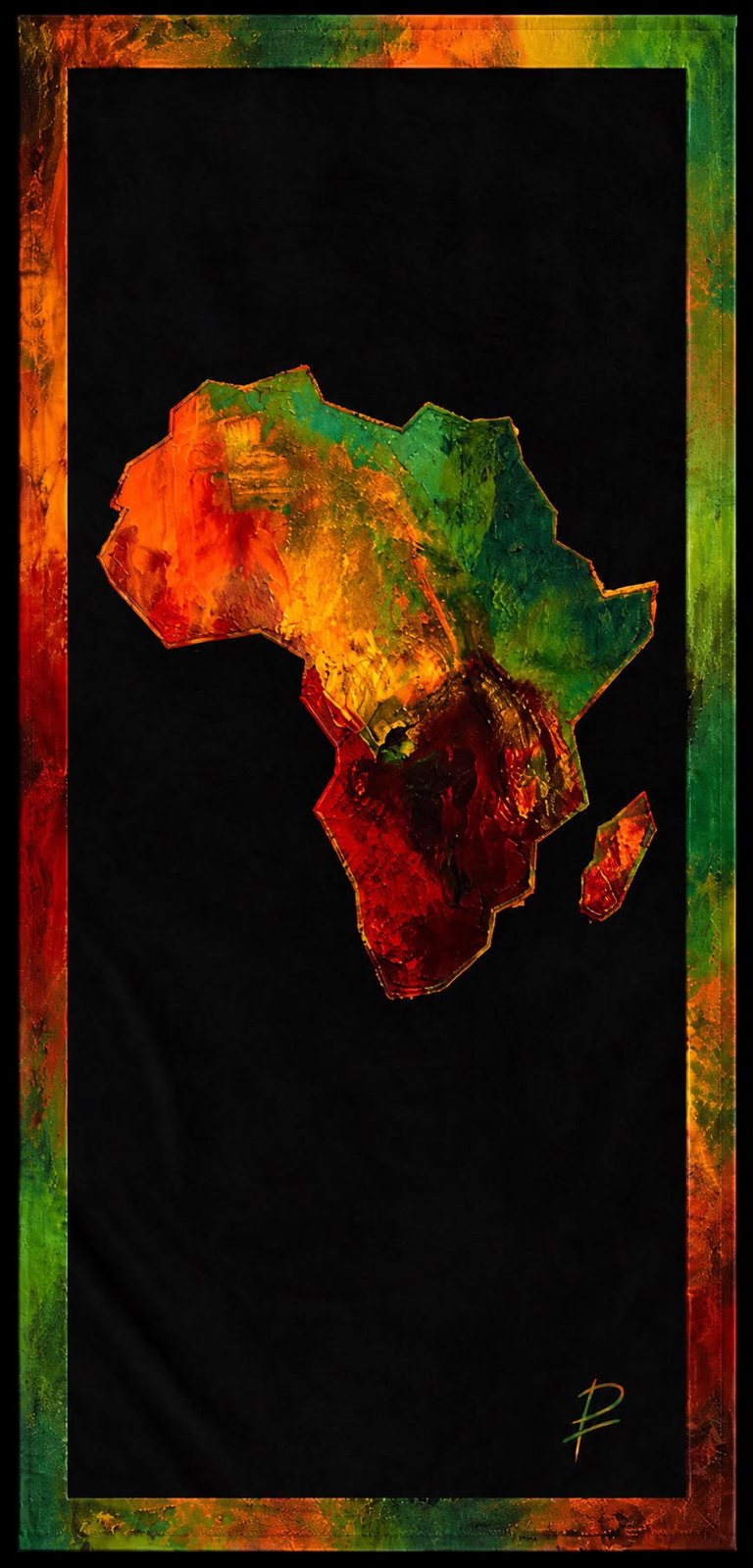
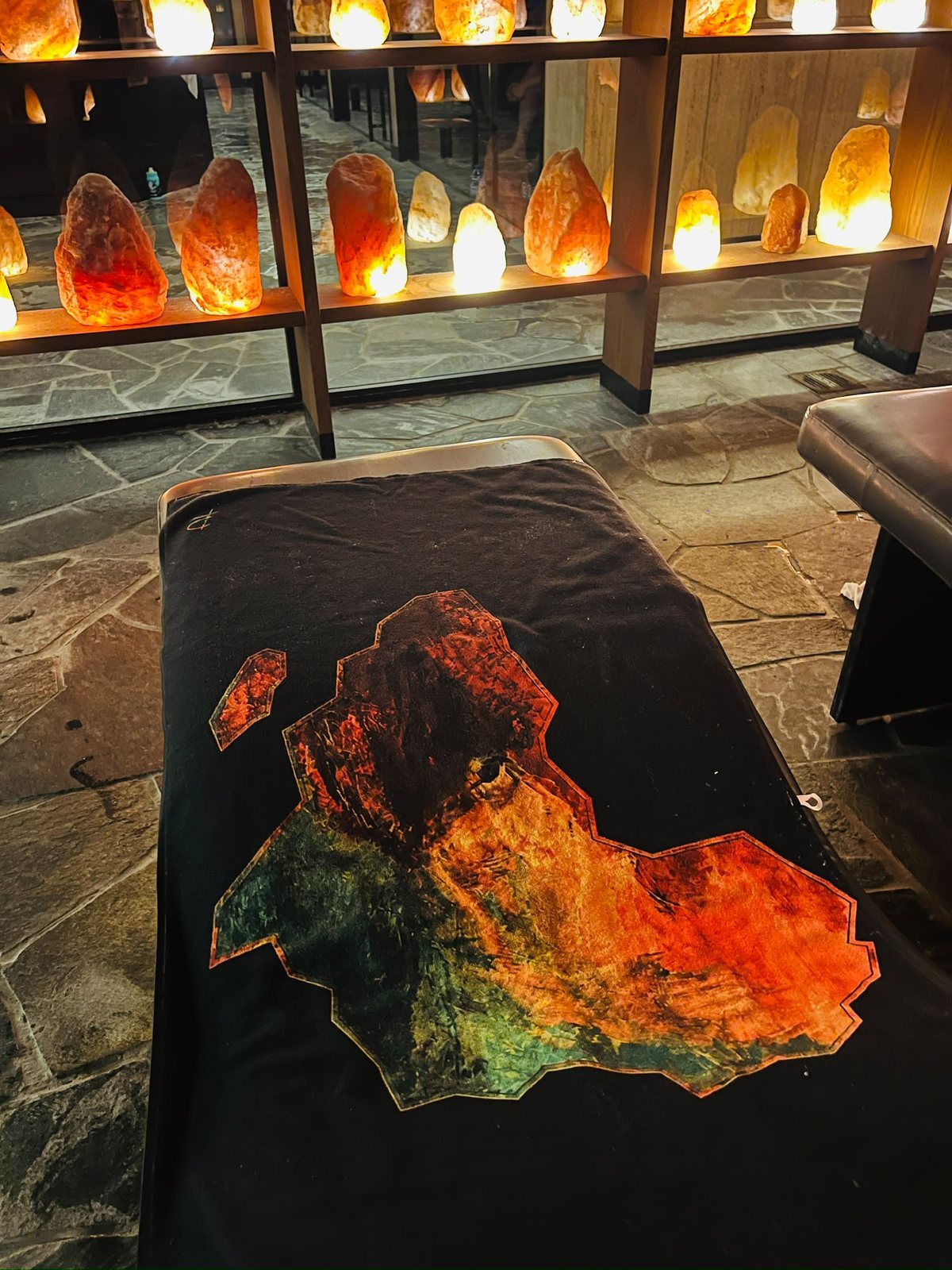
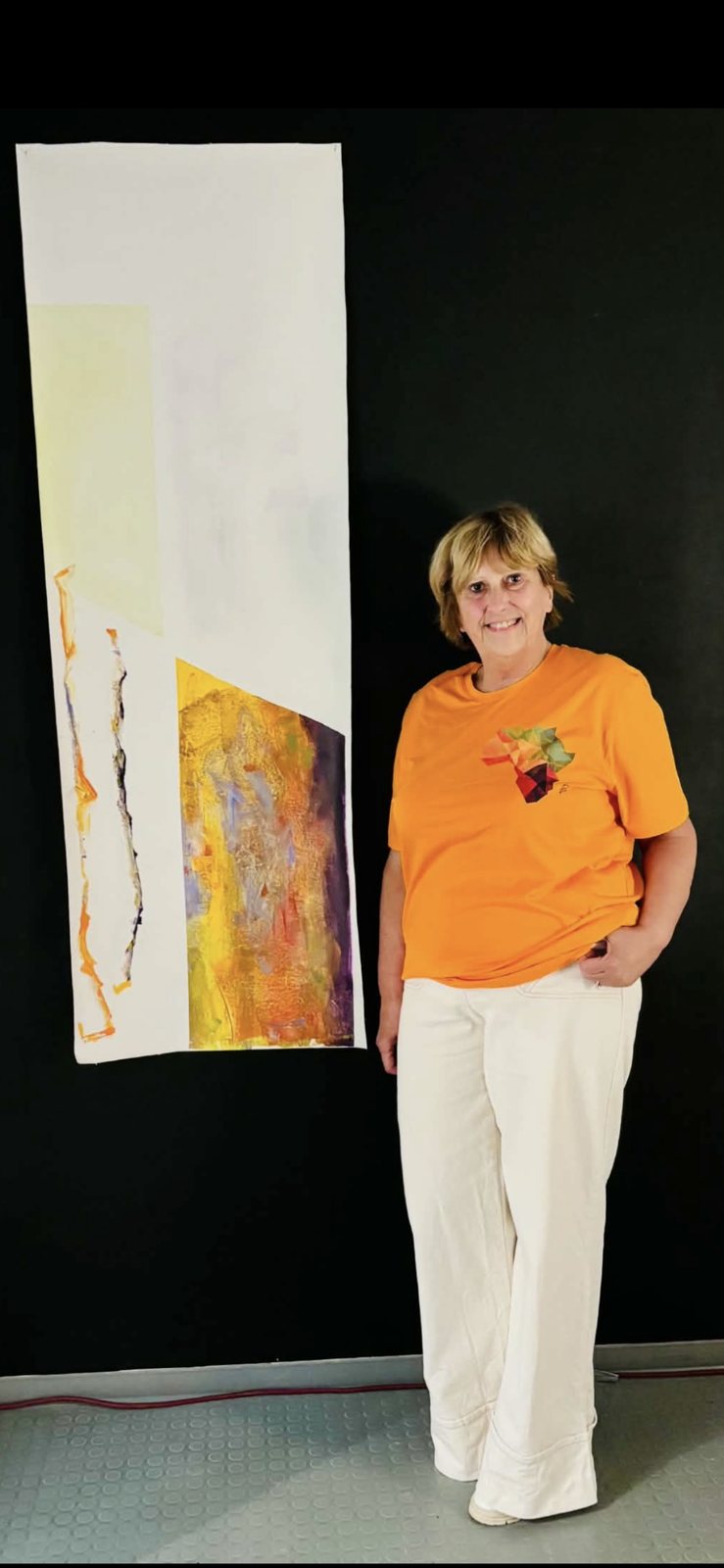
The red-orange canvas becomes Africa, lands on the bath towel, then breaks into facets on the T-shirt.

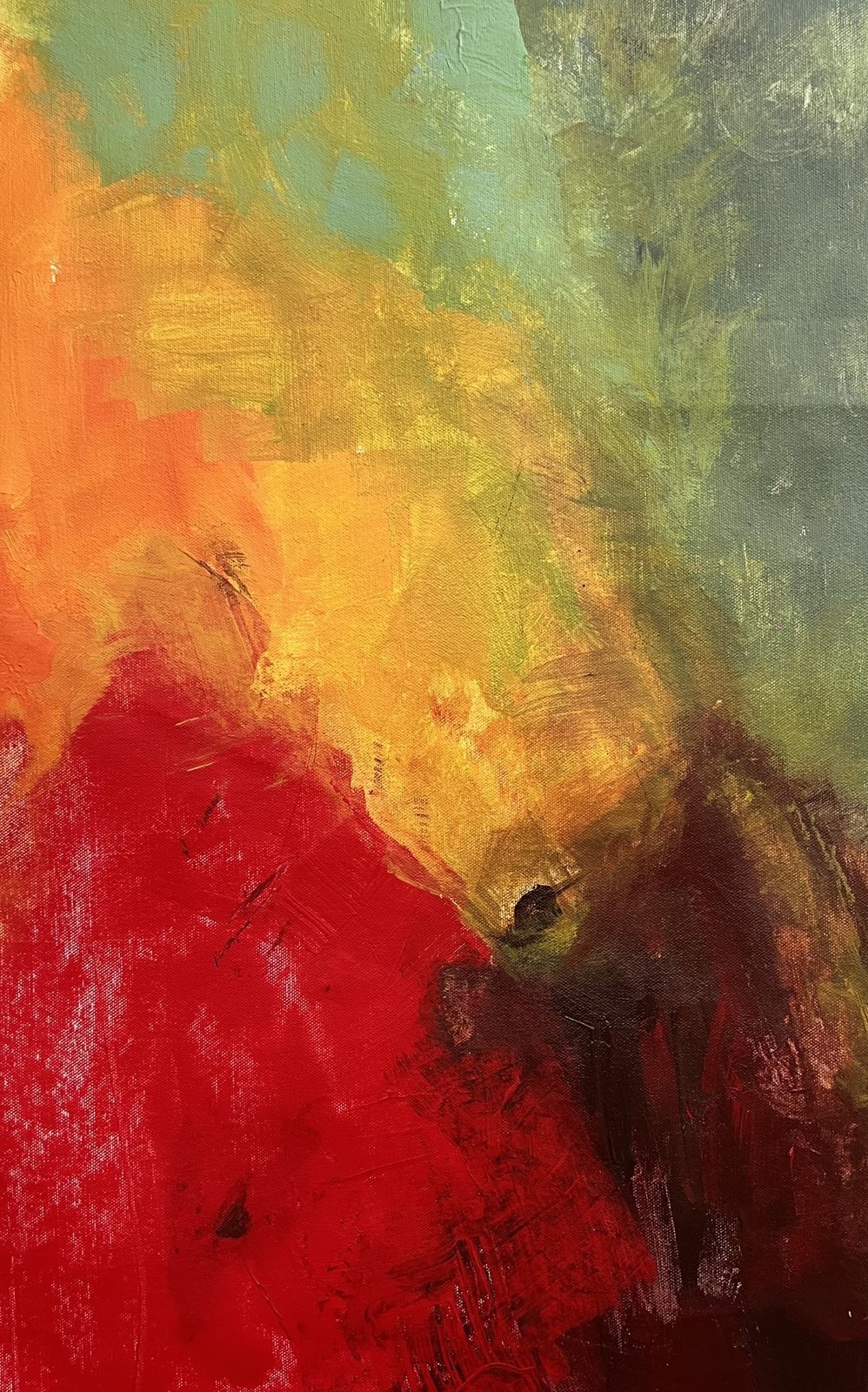
Painting: red, orange, yellow and green
The canvas
Black bath towel with painted Africa in the centre and a painted border
The bath towel
The towel on a spa lounger, in front of salt lamps
At the spa
Africa recomposed from painted facets
The facets
Fabienne Penninck wearing the orange T-shirt with faceted Africa
Worn

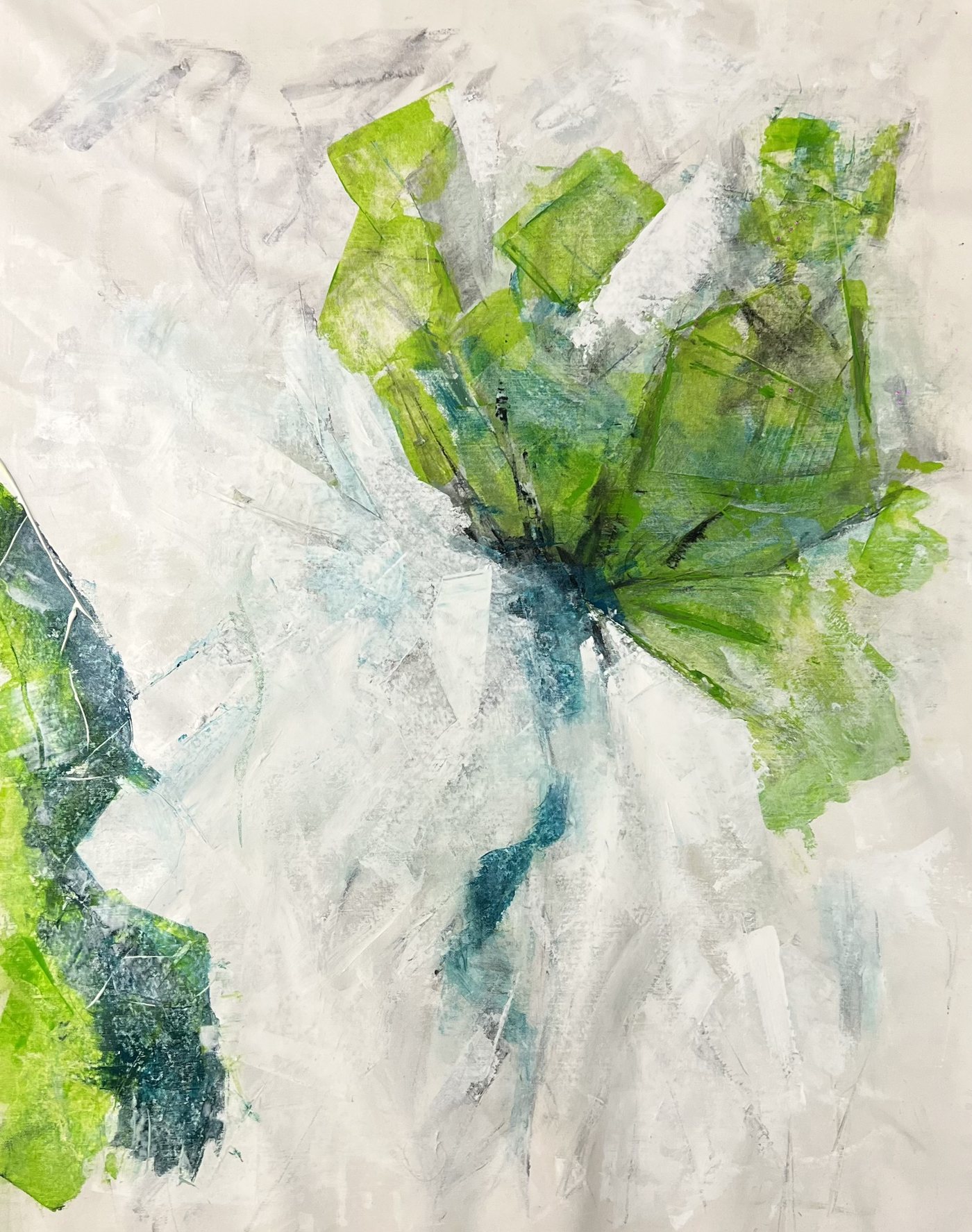
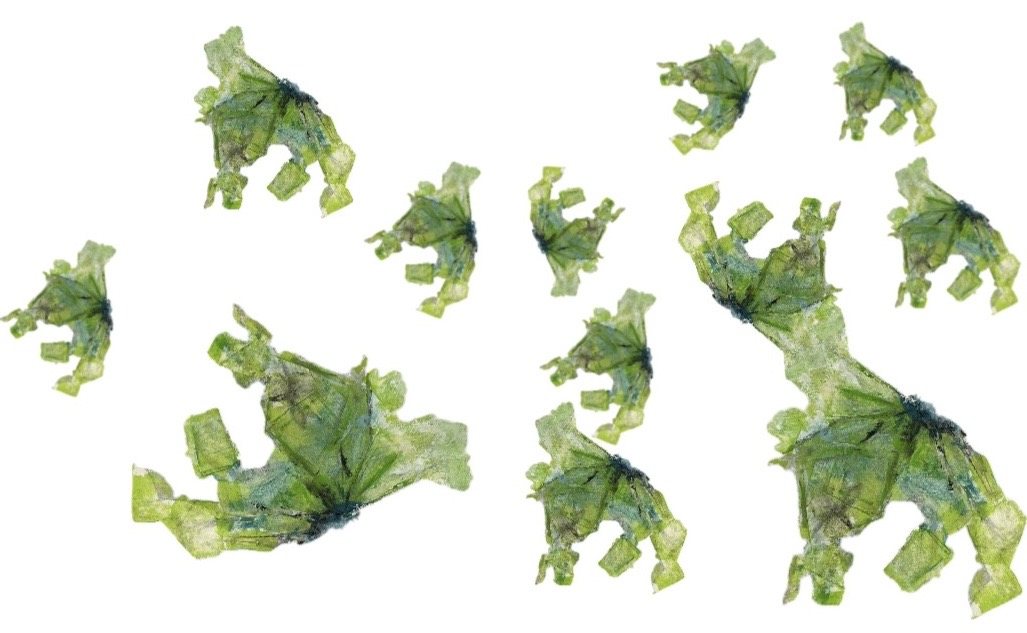
The sliding flower

The flower on the canvas breaks into fragments, then settles on the T-shirt.

Painting: a large green and teal flower
The canvas
The flower cut into fragments, scattered on white
The fragments
Fabienne Penninck wearing the T-shirt printed with a fragment of the flower
Worn

Domino game

Let's play

The seasons and the frame

The dominoes from my final-year (6th year) work, presented in the art history class at the École des arts de Braine-l'Alleud.

Travels

Dominoes born on the road.

Domino Process – The seasons

A painting gives rise to fragments, which give rise to other paintings. The film follows this path, season after season.

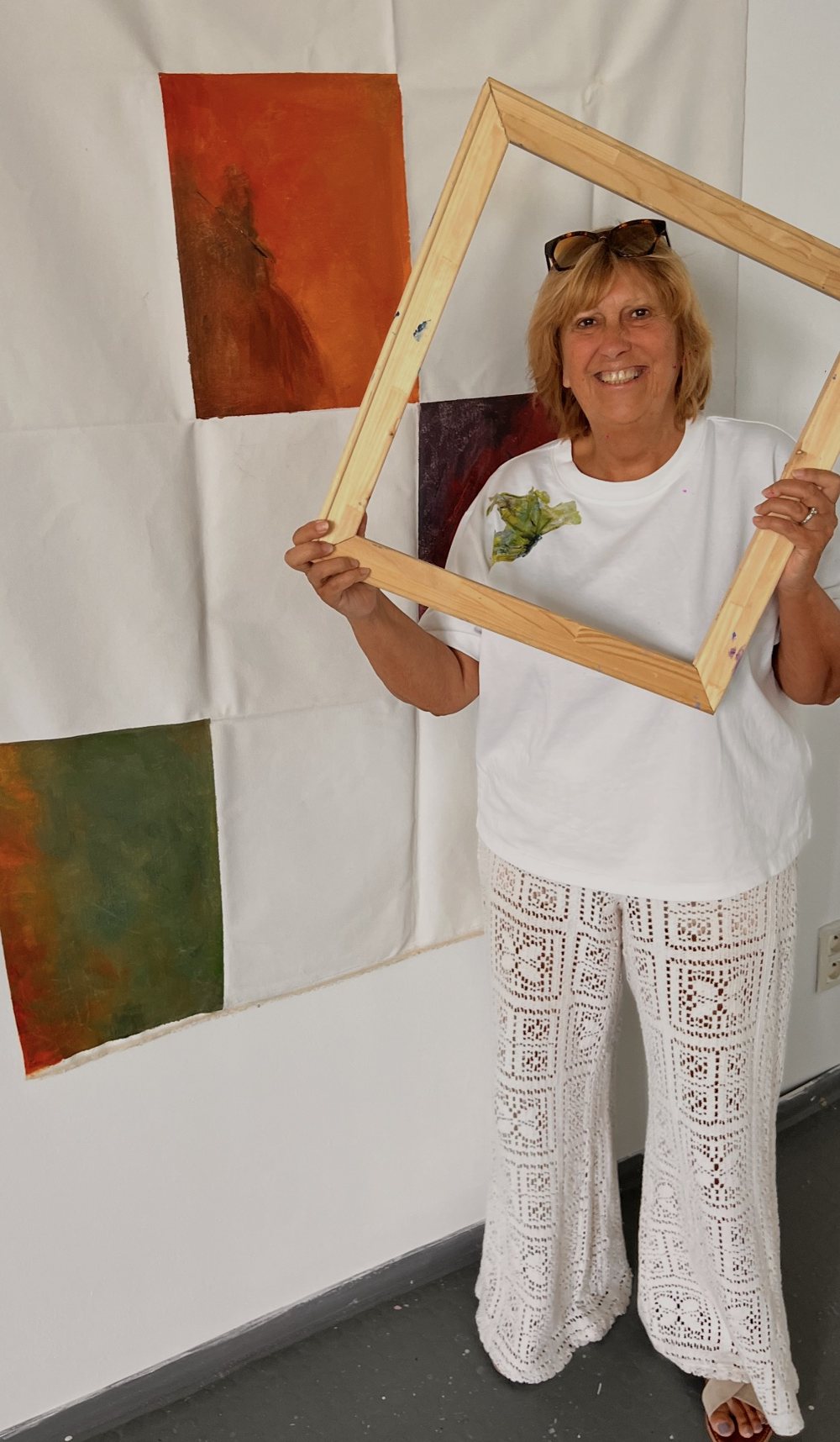
Portrait de Fabienne Penninck Fabienne Penninck

Biography

Fabienne Penninckborn in 1959

Painting has always been part of Fabienne Penninck's world, but the covid period was especially inspiring, and also saw her create video montages based on her paintings.

Her work is marked by a strong physical gesture: strokes of brush, knife and broom, erasing, splashes… Speed of movement and spontaneity, the importance of matter, work on light and colour, with inspiration drawn from nature, the sea and its magnificent sunsets.

A jazz saxophonist at the Tubize Academy for four years, she finds in music the improvisation that feeds her gesture. Music also enters her painting through a vibrating gesture, with ever bolder and more spontaneous brushstrokes: pure improvisation and experimental letting go, including in portraiture. Through her choice of textures and supports, her painting also appeals to touch.

Fabienne Penninck's practice is built on a dialogue between painting, photography and digital recomposition. Her work explores how images transform, through a process she calls evolving fragmentism (fragmentisme évolutif). Starting from original paintings, she creates new works by isolating details, reinterpreting them and letting them evolve into new forms. Her approach questions the relationship between the fragment and the whole, between the work and its metamorphosis.
Artistic career

Training and exhibitions

Residency at the Jacques Franck cultural centre (2020), the Ishango Oratorio, Le Delta, Namur (2022) and The EGG Brussels with the Fabrice Mukuna Band (2025).

  1. École des arts de Braine-l'AlleudMultidisciplinary course: painting, sculpture, ceramics, experimental techniques, then painting classes.
  2. Exhibition for colleagues at DG ConnectEuropean Commission.
  3. Permanent exhibition of her paintingsEuropean Commission.
  4. Musical lunches for the European institutionsPiano improvisation on her paintings.
  5. Art diploma, 3rd yearÉcole des arts de Braine-l'Alleud.
  6. Residency at the Jacques Franck cultural centreProjections and dance photography.
  7. AudiovisualVideo editing and photography.
  8. Painting workshop and art history
  9. Ishango Oratorio, Le Delta, Namur180 photographs of her paintings projected on a giant screen at the Grand Manège.
  10. The EGG BrusselsHer paintings projected during the Fabrice Mukuna Band concert.
  11. 6th year completedÉcole des arts de Braine-l'Alleud. Final-year work presented in the art history class, to fellow students and professor Anne Deliège.

In the art history class, 2026

In the art history class at the École des arts de Braine-l'Alleud, Fabienne Penninck presents her final-year work to her fellow students and professor Anne Deliège. The printed canvas is unfolded, lifted and turned over. The back becomes the front.

Contact

Write to Fabienne

E-mail
fabienne.penninck@outlook.com
Facebook
Fabienne Penninck Art
Phone
+32 497 17 37 15